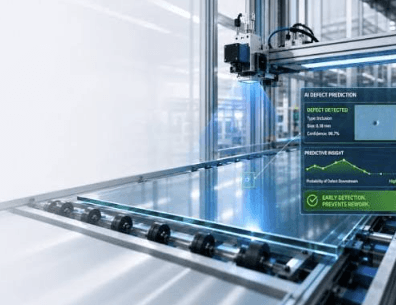
Modern Solutions for Precision Glass Processing

The demand for processed glass continues to grow across architecture, transportation, interior design, and industrial manufacturing. As applications become more specialized, glass processors need production systems that can handle different dimensions, shapes, and technical requirements while maintaining consistent results.
Thermal processing is central to many glass manufacturing operations. A properly designed heating and tempering system can provide controlled processing conditions and support the production of durable glass products. At the same time, manufacturers must balance productivity, quality, energy use, and maintenance.
The Importance of Modern Furnace Technology
A furnace is one of the most important pieces of equipment in a glass tempering production line. Its purpose extends beyond simply heating glass. It must provide a controlled thermal environment in which each section of the glass receives suitable treatment.
Modern furnace systems may contain multiple heating zones, sensors, control mechanisms, and circulation technologies. These components work together to maintain appropriate processing conditions.
Accurate control is particularly important when manufacturers process different glass thicknesses and sizes.
Improving Heat Distribution
Heat distribution has a direct relationship with production quality.
Large sheets can be challenging because the distance between the center and edges can influence how heat is transferred. Advanced equipment therefore focuses on creating a more balanced thermal environment.
Controlled air circulation and appropriately designed heating systems can support more uniform conditions. Operators can then adjust production parameters according to the material being processed.
Flexible Production Capabilities
Glass manufacturers rarely produce only one type of product.
A typical facility may need to process different thicknesses, sizes, and applications. Flexible machinery can therefore provide an important advantage by allowing manufacturers to adapt production settings without completely changing their workflow.
Production flexibility can also become valuable when customer requirements change or when a company expands into new market segments.
Continuous Monitoring
Modern manufacturing increasingly depends on real-time monitoring.
Sensors can provide information about temperature and operating conditions throughout the production process. Digital control systems can allow operators to observe these values and make appropriate adjustments.
Monitoring also supports quality management because production teams can compare operating parameters with expected results.
Mechanical Stability
Thermal performance is only one part of a successful glass processing system.
The mechanical components that transport glass through the equipment must operate smoothly and consistently. Unstable movement can create processing difficulties, particularly when dealing with large or delicate sheets.
Roller systems therefore need appropriate construction, alignment, and maintenance.
See also: Precision Agriculture Technology Explained
Reducing Production Waste
Waste reduction is an important goal for manufacturers because glass represents a significant material investment.
Production problems can result in rejected products, reprocessing, or material loss. Maintaining stable heating conditions and carefully monitoring production parameters can help reduce avoidable defects.
Waste management should also include proper handling of offcuts, damaged pieces, and other materials generated during processing.
Operator Training
Even highly automated machinery depends on knowledgeable operators.
Staff should understand basic machine functions, safety procedures, parameter selection, alarms, cleaning, and routine maintenance. Proper training can improve both operational efficiency and workplace safety.
Training is particularly important when a company introduces new equipment with unfamiliar control systems or production capabilities.
Workplace Safety
Glass manufacturing involves heavy materials, high temperatures, moving machinery, and electrical systems.
Safety procedures should therefore be established before production begins. Operators should use appropriate protective equipment and follow documented procedures for loading, unloading, cleaning, inspection, and maintenance.
Machine safety features should also be tested regularly to ensure that they function as intended.
Planning a New Production Line
Companies considering new equipment should begin by identifying their actual production needs.
Important questions include:
- What glass sizes are processed most frequently?
- Which thicknesses are required?
- What production volume is expected?
- Will the product range expand?
- How much floor space is available?
- What level of automation is appropriate?
- What maintenance support is required?
Answering these questions can make equipment selection more systematic.
Evaluating Total Operating Costs
Purchase price is only one part of an equipment investment.
Manufacturers should also consider installation, electricity consumption, routine maintenance, spare parts, training, downtime, and technical service.
A machine with a suitable balance between capacity and operating costs may provide greater long-term value than equipment selected solely because of a lower initial price.
For companies exploring specialized thermal processing equipment, the EASTTEC Top Convection Curved Glass Tempering Machine with Hard Roller is one example that can be examined when comparing available production technologies.
Frequently Asked Questions
1. What should manufacturers consider when selecting a glass processing furnace?
They should consider glass dimensions, thickness range, production volume, heating technology, automation, energy use, maintenance, and technical support.
2. Why is monitoring important during thermal processing?
Monitoring helps operators observe important production conditions and make adjustments when necessary. It can also support consistent quality control.
3. Is automation suitable for every glass manufacturer?
The appropriate level of automation depends on production volume, product range, workforce, budget, and operational goals. Manufacturers should select technology based on their specific needs.
Conclusion
Precision glass processing requires careful coordination between thermal systems, mechanical components, controls, operators, and quality procedures. Modern equipment can provide manufacturers with tools for improving consistency while handling increasingly diverse production requirements.
Before investing in a new system, businesses should evaluate their current workflow, future product plans, available space, operating costs, and maintenance needs. A well-matched production solution can support both efficiency and long-term manufacturing development.