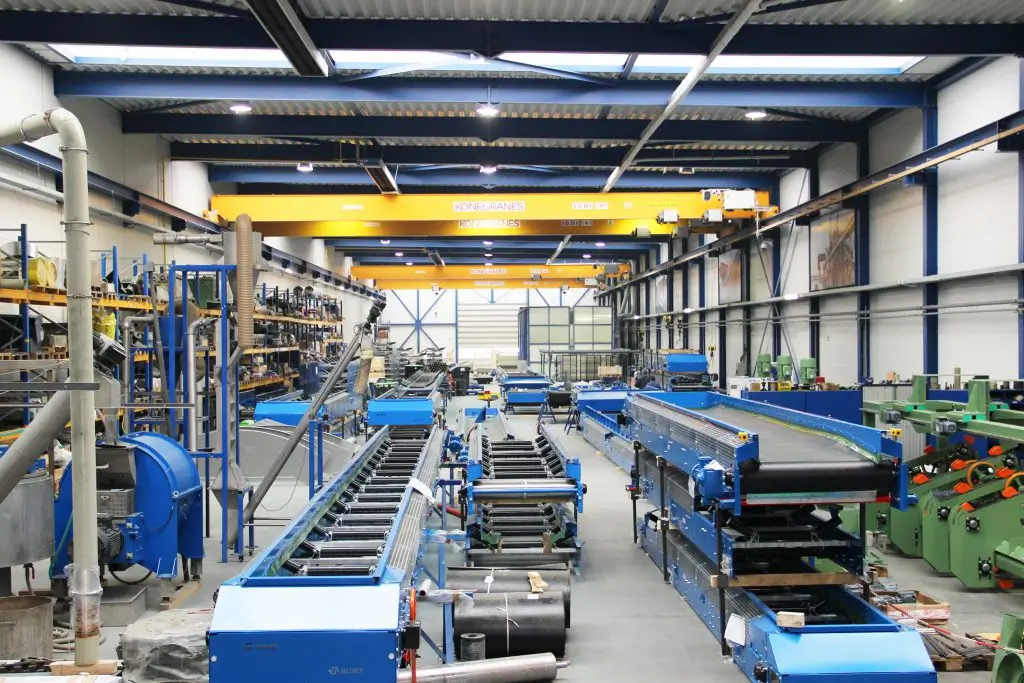
How Industrial Machinery Can Benefit from Proper Motor Selection

Electric motors are at the heart of countless industrial machines. They convert electrical energy into mechanical movement and help power equipment used throughout manufacturing, processing, material handling, and other sectors.
Selecting a motor for a specific application requires careful consideration because different machines place different demands on their drive systems. A motor used for a conveyor, for example, may have different starting and operating requirements from one used for a pump or ventilation system.
For equipment requiring a substantial level of mechanical output, a properly specified three-phase motor can provide a practical solution when its electrical and mechanical characteristics match the application.
Read Also: Renewable Energy Technology Explained
Start with the Machine
Motor selection should begin with the equipment rather than the motor itself.
The machine’s required torque, operating speed, duty cycle, and load should be identified first. Understanding whether the load remains constant or changes throughout the production cycle can help determine the appropriate motor characteristics.
Starting conditions are particularly important. Some machines require considerably more torque when starting than during normal operation.
Understanding Horsepower
Horsepower is commonly used to describe the output capability of an electric motor. A 10-horsepower motor, for instance, can provide a defined level of mechanical output under its rated operating conditions.
However, the horsepower rating should be viewed in context. A motor must be appropriately matched to the driven machine, and its operating conditions should be evaluated before installation.
Choosing a motor that is too small can result in excessive stress, while selecting one that is unnecessarily large may create inefficiencies depending on the application.
The Role of Three-Phase Systems
Three-phase electrical systems are commonly found in industrial facilities and are suitable for many types of machinery.
Motors designed for three-phase operation can provide continuous rotational performance and are often used in systems that require reliable mechanical power.
Before purchasing equipment, businesses should confirm the electrical specifications available at the installation location. Voltage and frequency compatibility are essential for proper operation.
Operating Speed Matters
The required motor speed depends largely on the machine it will drive.
Some applications need high rotational speed, while others require slower movement and may use a gearbox or another mechanical transmission system.
A complete system assessment should therefore consider the motor, coupling, gearbox, pulleys, and driven equipment together.
Environmental Conditions
Industrial environments can vary significantly.
A production area may have high temperatures, airborne dust, moisture, chemicals, or restricted ventilation. These factors can influence the type of motor protection and enclosure required.
The installation location should be evaluated before selecting equipment. The goal is to ensure that the motor is appropriate for the conditions in which it will operate.
Energy Efficiency
For equipment that operates continuously, energy consumption can represent a significant portion of operating costs.
Businesses can therefore consider motor efficiency when evaluating different options. The most appropriate choice depends on the operating schedule, load, and expected service life.
A slightly different purchase price may have a different impact when the motor operates for many hours every day.
Maintenance Planning
Maintenance should be considered before the motor is installed.
Operators can establish inspection schedules based on the manufacturer’s recommendations and the demands of the application. Routine checks may involve electrical connections, bearings, ventilation, temperature, and general operating condition.
Monitoring unusual vibration, noise, or temperature changes can also help identify potential issues early.
Mechanical Compatibility
Even when electrical specifications are correct, mechanical compatibility must also be verified.
Mounting dimensions, shaft configuration, coupling arrangements, and available installation space should correspond with the driven machine.
Taking measurements before purchase can help avoid installation complications later.
Practical Selection Checklist
A useful motor selection checklist can include:
- Required mechanical output
- Voltage and frequency
- Operating speed
- Starting torque
- Load type
- Duty cycle
- Environmental conditions
- Motor enclosure
- Mounting configuration
- Efficiency
- Maintenance requirements
Businesses looking for a motor suitable for a higher-output three-phase application can review XCMOTOR electric motor 10 hp 3 phase while comparing specifications against their equipment requirements.
Avoiding Common Selection Mistakes
One common mistake is choosing a motor based solely on horsepower. While output is important, it does not describe every characteristic required for a successful installation.
Another mistake is overlooking the environment. Dust, heat, and moisture can influence equipment performance and durability.
Ignoring future maintenance can also create unnecessary operating challenges. A motor should be selected with installation, inspection, and servicing in mind.
Frequently Asked Questions
1. Why is motor selection important in industrial machinery?
The motor directly affects the way equipment performs. A suitable motor can provide the required output and operating characteristics while supporting dependable machine operation.
2. What does a three-phase motor mean?
A three-phase motor is designed to operate from a three-phase electrical supply. These motors are widely used in industrial applications requiring mechanical power.
3. Should environmental conditions be considered?
Yes. Temperature, dust, moisture, ventilation, and other site conditions can influence the appropriate motor design and protection requirements.
Conclusion
Proper motor selection starts with a clear understanding of the machine and its operating conditions. Horsepower, electrical supply, speed, load, environment, efficiency, and mechanical compatibility all need to be considered.
By evaluating these factors before purchase and installation, businesses can make more informed equipment decisions and establish a stronger foundation for reliable industrial operation.