The Ultimate Guide to Minimalist Leather Wallets with Built-In AirTag Tracking

You know the feeling. You pat your back pocket and it’s flat when it shouldn’t be. Ninety percent of the time it occurs at the most inopportune time, just as you are about to settle down to pay for something, or leaving through the door while trying to catch a plane. The only thing that one could really do in the past is develop a habit of checking the back pocket or checking the table before walking out of the coffee shop. However, habits tend to fall through the cracks precisely when they are needed.
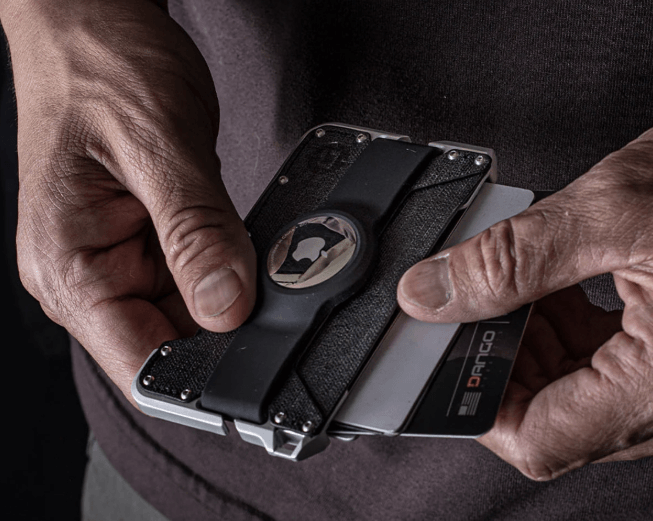
That’s the gap minimalist leather wallets with built-in tracking have started to close. They combine two trends that previously had nothing to do with each other: the trend of slim wallets with no room for thick wallets and their unnecessary pockets, and the trend of Bluetooth finders that can help people track down any lost items from their phones. Result? A leather wallet with airtag holder that is both more compact and less prone to getting lost.
Slimmer by Design
Minimalist wallets are a necessity due to the amount of excess baggage that is found in traditional wallets. Bifold wallets have been created with the assumption that people carry around a fair amount of money, credit/debit cards, receipts, and maybe even a checkbook. Most of that has disappeared from our daily routine. Minimalist wallets will contain anything from four to eight cards along with some money and nothing else.
What you’re left with is a wallet that’s often under a centimeter thick — even with a tracking chip tucked inside. That thinness changes how it actually feels day to day. It slides into a front pocket without leaving an outline in the form of a brick through your pants, nor will it cause you to lean to one side when you are sitting down and the phone is in your back pocket. Those who decide to move away from their big wallets notice the difference instantly.
Real-Time Location Tracking
The headline feature here is the tracking module, usually built right into the leather or fitted into its own internal pocket. It’s not some bulky add-on bolted onto the wallet — it’s typically thinner than two or three stacked cards, so you’d barely know it’s there.
Once it’s paired with your phone, the wallet shows up as a pin on a map inside a tracking app. Left it in a restaurant? In a friend’s car? Buried in a jacket you haven’t worn in a week? You check the app instead of mentally replaying your entire day. Some models also offer a “find nearby” mode — directional signals plus a sound cue — that’s handy when the wallet’s somewhere close but annoyingly hidden, like the bottom of a bag or a cluttered desk drawer.
Separation Alerts
Tracking after the fact is useful, but separation alerts might matter more day to day. This is the notification that fires when your phone and your wallet drift too far apart from each other — it catches the problem before it turns into an actual loss.
Say you walk out of a café and leave the wallet sitting on the table. With separation alerts turned on, your phone buzzes within moments, while you’re still close enough to just turn around and grab it. Without that alert, you might not clock it until you’re several blocks away — or worse, not until you’re standing at a register somewhere trying to pay. It’s the difference between a wallet that helps you find something after it’s gone and one that taps you on the shoulder before you’ve even left it behind.
Materials That Actually Hold Up
Leather is still the material of choice here, and it’s not purely about looks. Full-grain and top-grain leather develop a patina over time — they tend to look better as they age rather than just worn out. Leather is also flexible enough to keep a slim shape while still protecting whatever’s tucked inside, tracker included.
Build quality matters even more on a minimalist wallet honestly, because there’s nowhere for sloppy work to hide. Stitching, edge finishing, how the leather’s cut around the card slots — all of it is far more visible on a slim design than it ever would be on a bulky one. A wallet worth buying should feel solid the moment you pick it up: no loose threads, no uneven seams, and leather that can take years of pocket wear without cracking or stretching out around the card slots.
Battery Life That Fits Real Life
Because the tracker is sealed inside the leather, battery life is something the designers actually have to think through. Most of these chips run on coin-cell batteries that last a year or more under normal use, so you’re not stuck charging or swapping batteries every few weeks.
Some wallets give you a small compartment for a replaceable battery. Others seal the tracker completely, which means a dead battery means sending the wallet back for a professional swap — or replacing the tracking module outright.
RFID Protection
Card skimming — someone using a hidden RFID reader to lift your card data through your pocket or bag — isn’t an everyday threat, but it’s a real one. A lot of these wallets build RFID-blocking material right into the card slots or lining as a result.
It’s a quiet feature. No light, no notification, nothing to think about — it just blocks the frequencies skimmers rely on in the background. If you travel a lot, ride crowded public transit, or just tap to pay constantly, it’s a layer of protection that costs you nothing in bulk or design.
See also: Real-Life Applications of Artificial Intelligence
One Less Thing to Manage
Here’s an underrated perk: compared to a separate tracker you’d have to clip on yourself, a built-in one means there’s nothing extra to attach, adjust, or forget. The tracking is just part of the wallet from day one — no separate gadget to charge, no clip that can snap off, no add-on making the whole thing bulkier than it needs to be.
That matters more than it sounds like it should. Add-on trackers are usually the first thing people stop bothering with — the battery dies, the clip breaks, and suddenly it’s just dead weight nobody’s using. Build it in, and that whole failure point disappears.
A Real Example
Picture a frequent business traveler bouncing through airports, hotel rooms, and rental cars every week. Before switching to a tracking-enabled wallet, they’d lost track of it twice in six months — once in a hotel room after checkout, once in a rideshare. Both times meant hours of phone calls and follow-ups, and the rideshare wallet never turned up at all.
After the switch, they turned on separation alerts. One trip, they left the wallet on a hotel nightstand and were already walking toward the elevator when their phone buzzed — they turned around, and it was still sitting right there. Another time, they left it on the back seat of a taxi. The app showed the car’s last known location, one call to the taxi company, and they had it back within the hour. Neither incident cost more than a few minutes, compared to the hours — and one total loss — from before.
At a Glance
| What It Does | The Problem It Solves | Why It Matters |
| Slim profile | Bulky, uncomfortable wallets | Comfortable in any pocket |
| Real-time tracking | Not knowing where the wallet is | Pulls up its last known location |
| Separation alerts | Leaving it behind without noticing | A heads-up before you’ve gone too far |
| Durable leather | Wallets wearing out fast | Holds up for years, ages well |
| Long battery life | Constant charging hassle | Runs a year or more without attention |
| RFID-blocking lining | Contactless card skimming | Cards protected, no added bulk |
| No external tracker | Add-on gadgets that get lost or ignored | Tracking’s built in from the start |
The Short Version
- Minimalist wallets cut the fat — just cards and cash, nothing else.
- A built-in tracker adds location-finding and separation alerts without really adding thickness.
- Separation alerts often end up mattering more than after-the-fact tracking, since they catch you before the wallet’s actually lost.
Wrapping Up
A wallet doesn’t have to do much. Hold your cards, carry some cash, stay out of the way in your pocket. What’s different now is that it can also help you keep tabs on itself. These wallets take a design that was already working well and add one practical layer that solves a genuinely common headache: not knowing where your wallet went. If you’re the type who leaves things behind, travels constantly, or just wants peace of mind, this is about as low-effort an upgrade as it gets. You don’t have to change a single habit or carry anything extra — it just makes the leather wallet with airtag holder you already have a little smarter.