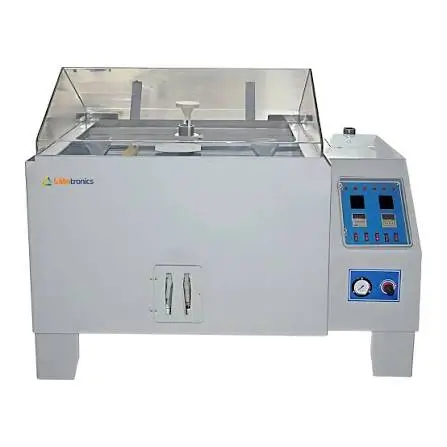
Salt Spray Chamber Basics: A Starting Point for First-Time Buyers

Purchasing a salt spray chamber for the first time can feel overwhelming given the range of specifications, standards, and configurations available. This guide breaks down the fundamentals in plain terms for buyers approaching this decision for the first time.
What a Salt Spray Chamber Is For
At its core, a salt spray chamber exists to simulate accelerated corrosion, allowing manufacturers to evaluate how coatings, metals, and finished products will hold up against real-world corrosive environments without waiting months or years to find out.
Understanding Chamber Size Options
Chambers generally range from compact benchtop-style units suited to small components, up to large walk-in chambers capable of testing full-size automotive parts or large assemblies. Matching size to your typical specimen volume is one of the first decisions to make.
Key Specifications to Understand
Interior Volume
This determines how many specimens can be tested simultaneously, directly affecting testing throughput and lab efficiency.
Temperature Range and Accuracy
Look for chambers capable of maintaining precise, stable temperatures, since even small fluctuations can affect corrosion rate consistency across a test cycle.
Standards Compliance
Confirm the chamber is designed to meet the specific testing standard your industry requires, whether ASTM B117, ISO 9227, or a regional equivalent.
Budgeting for Total Cost of Ownership
Beyond the initial purchase price, factor in ongoing costs like saline solution, calibration services, replacement parts, and the water or compressed air infrastructure the chamber requires to operate.
For a closer look at available chamber configurations and specifications, LIB Industry salt spray chamber offers a helpful reference for first-time buyers.
See also:Hawaii’s Housing Market Trends and Forecast
Planning for Installation Requirements
Salt spray chambers require adequate ventilation, water supply, and often compressed air access, so confirming your facility can accommodate these requirements before purchase avoids costly surprises during installation.
Training Your Team
Even a well-specified chamber underperforms if operators aren’t properly trained on setup, monitoring, and maintenance procedures, making manufacturer-provided training a valuable part of the purchasing decision.
Frequently Asked Questions
What size salt spray chamber is right for a small lab? Benchtop or compact chamber models are often sufficient for labs testing smaller components or lower testing volumes.
Is standards compliance negotiable when choosing a chamber? No, if your test results need to be accepted by clients or regulators, the chamber must be designed to meet the specific standard your industry requires.
What ongoing costs should be budgeted beyond the purchase price? Saline solution, calibration, replacement parts, and utility costs like water and compressed air all factor into total ownership cost.
Final Thoughts
Approaching a first salt spray chamber purchase with a clear understanding of size, specifications, and total cost of ownership leads to a far smoother buying experience. Taking the time to plan these details upfront pays off in years of reliable testing ahead.