Inside the Lab: The Technology That Puts Coatings Through a Lifetime of Stress

A modern fatigue test is a small act of time travel. A coated metal panel that might spend fifteen years on an aircraft or a wind turbine is mounted in a laboratory rig, and within weeks it experiences the mechanical equivalent of that entire working life: millions of loading cycles, repeated bending, vibration, and stress, all carefully measured. If its protective coating is going to crack, peel, or lose adhesion in service, the lab intends to find out first.
The technology behind that process has become remarkably sophisticated. Today’s coating fatigue testing combines precision machinery, environmental simulation, and detailed data analysis to answer a deceptively simple question: how does this surface protection age under real working conditions?
Rigs That Never Get Tired
At the heart of the process are cyclic loading machines. Servo-hydraulic and electromechanical rigs apply controlled, repeatable forces to test specimens — bending them, stretching them, or subjecting them to vibration at set frequencies and amplitudes. Modern systems can run continuously for days, logging every cycle, and can be programmed with load patterns that reflect actual service: the flexing of a wing component, for example, or the constant low-level vibration of industrial machinery.
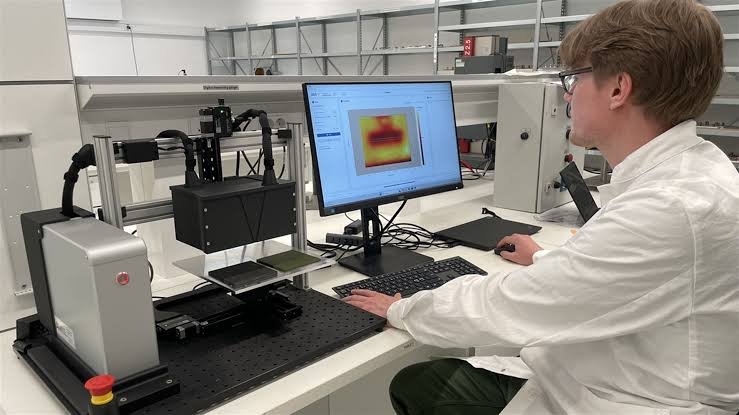
Specimens are usually prepared to strict dimensions, coated using the exact process intended for production, because the test is evaluating a system, not just a material. Sensors track displacement, load, and strain, while technicians inspect samples at intervals for the first signs of cracking. High-resolution imaging and microscopy reveal micro-cracks long before they would be visible to the naked eye, giving engineers a precise record of when degradation begins and how fast it progresses. Programmes built around Mechanical testing bring these elements together into a repeatable method rather than a one-off experiment.
Rebuilding the Weather Indoors
Mechanical stress alone tells only half the story. In service, coatings face moisture, salt, heat, cold, and ultraviolet light at the same time as physical loading, and those factors interact: a micro-crack opened by fatigue becomes an entry point for corrosion, which weakens adhesion, which makes the next cycles more damaging. Environmental chambers and corrosion cabinets recreate those combined conditions.
Salt spray and cyclic corrosion tests expose samples to aggressive atmospheres that simulate coastal or offshore air. Climate chambers swing temperatures above and below zero, testing whether the coating and the metal beneath it — which expand at different rates — stay bonded through repeated thermal shock. Humidity and condensation cycles probe for blistering, while UV exposure checks resistance to sunlight-driven degradation. Running environmental exposure alongside or between blocks of mechanical cycling produces results that single-factor tests simply cannot match.
Standards, Data, and the Digital Thread
None of this would mean much without standards to make results comparable. International test methods govern everything from how samples are prepared and cycled to how adhesion is measured, often with pull-off or cross-cut techniques, and how damage is graded. Following recognised standards means a result produced in one laboratory can be trusted and repeated in another — essential for aerospace and energy supply chains, where components cross borders and audits are routine.
The data side has transformed, too. Where technicians once relied on periodic visual checks, modern programmes generate continuous streams of measurements that can be plotted as fatigue curves, compared across coating formulations, and archived as part of a component’s qualification record. Digital imaging creates a visual timeline of crack initiation and growth. For engineers developing new coating chemistries, that feedback loop is gold: adjust a formulation, rerun the programme, and see in numbers whether durability improved.
This is also where testing connects with design. Results feed back into finite-element models and lifetime predictions, helping engineers place realistic numbers on service intervals instead of conservative guesses. A coating validated by data can support longer inspection intervals with confidence; one that shows early cracking can be redesigned before it ever reaches an aircraft or turbine.
The direction of travel is clear. As coatings become thinner, lighter, and more specialised — and as components are pushed into harsher environments for longer lives — the laboratories that simulate those lives in advance become more important, not less. Fatigue testing technology is, in effect, the rehearsal space where a coating proves it can handle the performance demanded of it, years before the real show begins.