Digital Tools Reshaping Modern Ship Design: CAD, CFD and Digital Twins

Not long ago, a ship’s shape was proven in a towing tank, with a wax or wooden model pulled through still water while engineers watched the wave pattern. The tank still exists, but today it is the final examiner rather than the first teacher. Digital tools have moved most of the experimentation onto screens, where hundreds of ideas can be tested, discarded and refined before any model is built.
CAD as the Single Source of Truth
Modern design begins in three-dimensional CAD environments built specifically for ships. Unlike generic modelling software, marine CAD understands hull surfaces, decks, bulkheads and the curved geometry of a vessel that has almost no straight lines. Every discipline works from the same model: the structure, piping, electrical runs and accommodation are all placed in one shared digital space.
That shared model pays off in clash detection. Software automatically flags where a pipe would pass through a beam or a cable tray would collide with a ventilation duct — problems that once surfaced expensively in the shipyard, surrounded by scaffolding and deadlines. Finding them on screen costs minutes; finding them in steel costs weeks.
CFD: Testing the Water Before Touching It
Computational fluid dynamics has transformed hull development. By simulating water flow around a digital hull, CFD reveals resistance, wave making, propeller inflow and even the risk of slamming in heavy seas. Designers can compare a dozen bow shapes in the time a single physical model once took, and they can test at the drafts and speeds the vessel will actually use, including the awkward part-loaded conditions that towing tanks rarely prioritised.
The same technology now serves ship design well beyond the hull. CFD models air flow over superstructures to cut wind resistance, predicts exhaust dispersion, and helps position intakes so a vessel does not breathe its own fumes. Coupled with structural analysis software, it lets engineers see not just how water pushes on the ship, but how the ship answers back.
The Digital Twin Sails With the Ship
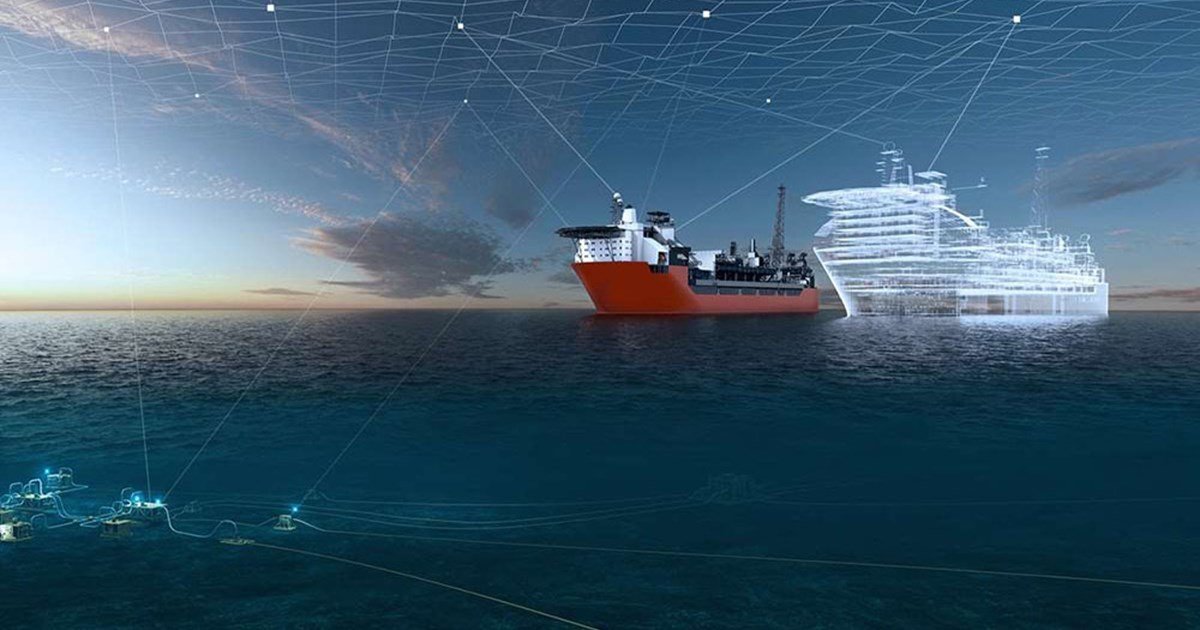
The newest shift is that the model no longer retires at delivery. A digital twin — a living simulation fed by sensors aboard the real vessel — compares actual performance with the design prediction. When fuel consumption drifts above the twin’s expectation, operators know something has changed: hull fouling, propeller damage or an engine in need of tuning.
Twins also change maintenance. Instead of servicing equipment on fixed calendar intervals, owners can plan work around measured condition, and designers can feed real operating data back into their next project. A twin that shows a vessel spending most of its life at sixty per cent of design speed is a powerful argument for optimising the next hull for exactly that speed.
Faster Iteration, Better Questions
The deepest effect of these tools is cultural. When testing an idea takes hours instead of months, designers ask more questions. What if the stern were wider? What if the propeller turned slower and larger? Simulation does not replace judgment — someone still has to decide which results matter and which are artefacts of the model — but it gives judgment far more evidence to work with.
Physical testing remains the final proof, and classification rules still anchor the process in measured reality. The difference is that ships now arrive at that proof already refined by thousands of virtual experiments. The result is a quieter, more efficient vessel, and a design process that learns from every ship it launches.
The same tools are also changing who can participate in the process. Owners can walk through a virtual engine room months before it exists, checking access and sightlines from a headset rather than from drawings. Crew representatives can rehearse maintenance tasks in the model, flagging the valve that would be unreachable or the filter that could not be changed at sea. Classification surveyors increasingly review digital submissions, interrogating the model directly instead of relying solely on flat drawings. Each of these uses extracts more value from the same digital asset, and each reduces the chance that a misunderstanding survives until it becomes expensive. In that sense, the modern design office is not just drawing a ship; it is building a shared, testable version of the truth that the owner, the yard, the regulator and the eventual crew can all examine together.