Quality Considerations for Boswellia-Based Botanical Ingredients

Botanical extracts are widely used in supplement development because they provide plant-derived constituents in formats suited to modern manufacturing. For formulators, the challenge is not simply identifying a plant with a long history of traditional use. They must also establish the botanical identity, chemical profile, purity, stability, and consistency of the supplied ingredient.
Boswellia is an important example of a botanical used in a variety of herbal formulations. Its resin-derived preparations are commercially available in different forms, and the differences between extracts can affect both formulation performance and the interpretation of research.
What Is Boswellia Serrata?
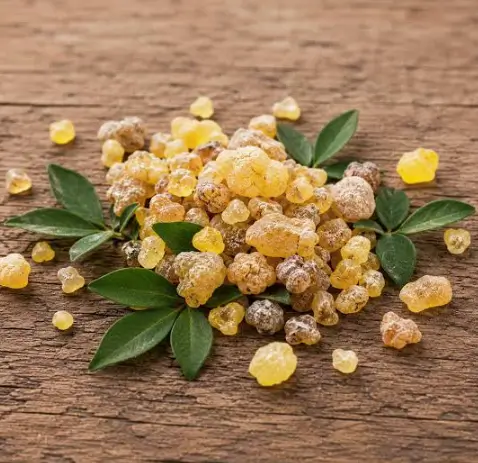
Boswellia serrata is a tree associated with traditional herbal practices in South Asia. Its resin contains several naturally occurring compounds, including boswellic acids, which have attracted scientific interest.
Commercial ingredients may be produced using different extraction methods and may vary in their concentrations of particular constituents. This makes the specification especially important when manufacturers are comparing suppliers or developing a product intended to deliver a consistent composition.
The botanical name is only the starting point. Buyers should confirm the plant part, processing method, extract ratio, analytical markers, and other parameters that define the actual material being supplied.
Why Extract Powder Is Suitable for Manufacturing
Powdered extracts can be convenient for producers of capsules, tablets, blended supplements, and other dry formulations. Their suitability depends on particle size, flow characteristics, moisture content, bulk density, and compatibility with the other ingredients.
Easier batching and blending
A dry powder can be measured and incorporated into a manufacturing blend using established production equipment. However, differences in particle size and density can cause segregation during transport or mixing. Manufacturers should assess blend uniformity and select mixing conditions appropriate for the formulation.
Defined ingredient specifications
A specification gives the buyer a practical basis for accepting or rejecting a batch. It may include identity, marker-compound content, moisture, microbiological limits, heavy metals, residual solvents, and other parameters relevant to the product.
Storage and shelf-life planning
Botanical powders can be affected by moisture, oxygen, light, and temperature. Suitable packaging and storage conditions should be established from the ingredient’s stability information. Finished-product stability must also be assessed because other formulation ingredients and packaging materials may affect the overall result.
Understanding Boswellic Acid Standardisation
Boswellic acids are frequently discussed in connection with Boswellia extracts. However, the concentration of these compounds may differ between products. A standardised extract should have a clearly defined marker or analytical profile, supported by an appropriate test method.
Buyers should clarify whether the supplier reports total boswellic acids, selected individual compounds, or another measurement. These values are not necessarily interchangeable. The extraction process and analytical technique can influence the result, so a specification should identify how the measurement is determined.
Standardisation is useful for quality control, but it does not independently establish clinical effectiveness. Research findings from one extract should not automatically be applied to every commercial Boswellia ingredient.
Assessing Quality and Purity
Quality assessment should begin with verified botanical identity and continue through chemical analysis, contaminant testing, and batch traceability.
Identity verification
Testing helps establish that the ingredient corresponds to the intended botanical source. The methods used should be appropriate for the material and the risks associated with possible substitution or adulteration.
Contaminant controls
Depending on the source and processing method, relevant tests may include heavy metals, microbial limits, pesticide residues, and residual solvents. Requirements should be based on the intended application and the regulations of the destination market.
Certificate of analysis
A certificate of analysis should identify the batch and provide relevant results against the agreed specification. Buyers should check that test methods, limits, and acceptance criteria are clear. For critical supply chains, they may also assess whether independent or third-party testing is appropriate.
Formulation and Manufacturing Challenges
Even a well-characterised extract may behave differently from other ingredients during production. Powder flow can affect filling accuracy, while particle size may influence blend uniformity and dissolution or dispersion behaviour.
Formulators should consider the intended delivery format before choosing an extract. Capsules and tablets may have different requirements from powdered drink mixes or other products. Compatibility testing can identify interactions with excipients, flavours, binders, and moisture-sensitive ingredients.
Pilot batches are useful for evaluating these issues before scaling up. Manufacturers can measure processing consistency, physical stability, and relevant quality attributes under conditions that reflect the intended production process.
See also: Precision Agriculture Technology Explained
Responsible Communication About Botanical Benefits
Boswellia is commonly discussed in wellness products, including formulations marketed for joint comfort and inflammatory-response support. Scientific evidence varies by preparation, dose, study design, and intended outcome. Findings involving a particular standardised extract cannot automatically be applied to all Boswellia products.
Manufacturers should ensure that claims are accurate, supported by appropriate evidence, and compliant with the applicable regulations. A raw ingredient should not be presented as a treatment or cure for a disease without the necessary legal authorisation and substantiation.
Consumers with existing medical conditions or those taking medicines should seek advice from a qualified healthcare professional before beginning a supplement regimen.
Choosing a Supply Partner
Supplier selection should consider technical transparency, product consistency, documentation, communication, and delivery reliability. Buyers should request the current specification, analytical methods, sample availability, minimum order quantity, packaging details, and lead times.
The details for hongda naturals Boswellia Serrata Extract Powder can form part of a supplier comparison. Current standardisation, test documentation, and commercial availability should be confirmed directly rather than inferred from the product name.
Frequently Asked Questions
1. What compounds are commonly monitored in Boswellia extracts?
Boswellic acids are frequently used as analytical markers. The exact compounds and concentration requirements depend on the extract specification and the manufacturer’s intended application.
2. Does a higher marker concentration guarantee better quality?
Not by itself. Quality also depends on botanical identity, purity, extraction method, contaminant levels, analytical reliability, and suitability for the intended formulation.
3. What should manufacturers check before placing an order?
They should confirm the botanical source, extract ratio, standardisation method, certificate of analysis, contaminant testing, packaging, storage conditions, traceability, and delivery terms.
Conclusion
Boswellia serrata extract powder can be a useful botanical ingredient when its composition and quality are well defined. Manufacturers should evaluate standardisation, purity, powder-handling characteristics, and stability before incorporating it into a finished product. Clear documentation and responsible product claims help establish a more reliable foundation for botanical sourcing and formulation development.