Pickleball or Tennis: Comparing Solo Training Machines Across Sports

Solo practice has quietly become the secret weapon of players who improve fast. Whether you are dialing in your dinks on a quiet pickleball court or grooving your forehand on an empty tennis court at dawn, a ball machine lets you hit hundreds of quality reps in an hour — something no casual rally partner can reliably give you. But the machines built for these two sports are not interchangeable. Here is how pickleball and tennis solo training machines compare, and what each sport’s engineering reveals about the game itself.
Ball Speed and Feed Rate: Two Different Sports, Two Different Needs
The most obvious difference is what each machine throws. Pickleball machines typically launch balls at 15 to 60 mph, with feed rates from one ball per second up to every ten seconds — matching the sport’s rhythm of quick exchanges followed by short pauses.
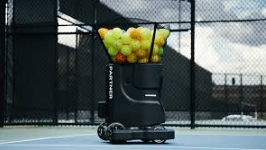
Tennis machines must replicate the pace of a live opponent. Recreational models throw between 20 and 80 mph, with premium units pushing past 90 mph. The heavier ball demands a sturdier drive system: stronger motors, larger wheels, and a heavier chassis to stay stable when firing a heavy topspin drive.
What this means for you: pickleball’s gentler output is plenty for high-repetition grooving. Tennis players preparing for real match pace genuinely benefit from machines that reach the upper speed range.
Drill Programming and Shot Variety
Modern machines in both sports have moved far beyond “stand there and catch.” Programmable drills are now the headline feature.
Pickleball: The Kitchen Dictates the Drills
Pickleball is won and lost within the seven-foot non-volley zone — the kitchen. So the best machines are engineered around kitchen-adjacent practice: dink volleys that drop just over the net, third-shot drop sequences, and pop-up drills that punish lazy resets. Many offer two-line drills, random oscillation for reaction training, and speed-ups that force you to reset a hard-driven ball.
Tennis: Depth and Spin Are Everything
Tennis machines lean on depth control and spin variation. Expect programmable six-ball drills — deep cross-court forehands, backhands down the line, short angled balls, and lobs — plus random oscillation with variable depth. The big differentiator is spin: quality machines independently vary topspin and slice, letting you practice against a heavy topspin grinder or a biting slice.
What this means for you: both sports have excellent drill libraries now, but pick the machine whose programming matches your sport’s winning patterns — kitchen control for pickleball, depth and spin tolerance for tennis.
Portability and Court Footprint
A pickleball court is a quarter of the size of a tennis court, and the machines shrank accordingly. Most pickleball machines weigh 12 to 25 pounds — the lightest fit in a gear bag, and even loaded ones roll on wheels with a pull handle. Battery life covers two to four hours, and setup takes about a minute: drop it at the baseline, load 60 to 100 balls, and go. For players comparing options, a portable pickleball machine that combines light weight with programmable drills is the sweet spot — easy to carry to the park courts and capable enough to challenge improving players.
Tennis machines are a different animal. Entry-level units start around 35 pounds, and premium machines with 300-ball hoppers can push past 60 pounds. They almost always ship with carts or rugged wheels, and many players drive them to the court rather than carrying them. The upside: larger hoppers mean fewer interruptions to refill during full-court drills.
What this means for you: if your sessions are spontaneous, pickleball machines win on convenience. Tennis players should budget for the extra weight and think about cart-style mobility.
Power, Noise, and Battery Realities
Both categories now run on rechargeable lithium batteries, but power demands differ. Pickleball machines draw less energy per shot, so mid-size batteries deliver long sessions and recharge in two to three hours. They are also relatively quiet — a real advantage on shared pickleball courts squeezed between homes and playgrounds.
Tennis machines at high speed and spin settings drain batteries faster, and a full recharge can take four to six hours. Noise is louder too, and some premium tennis machines now offer swappable battery packs for back-to-back sessions without a recharge break.
Price Ranges: What Good Solo Training Costs
Prices in both sports follow a similar ladder, but the rungs sit at different heights.
Entry-level pickleball machines start around $300 to $500 — steady feeds, basic oscillation, and adjustable speed, perfect for drilling twice a week. Mid-range models ($500 to $900) add programmable drills, two-line modes, and remote controls. Premium machines ($900 to $1,500) offer app-based drill programming, larger hoppers, and spin control that rivals tennis gear.
Tennis machines start higher: basic models run $500 to $800, mid-range machines with programmable drills and decent spin sit between $800 and $1,500, and premium units with full drill libraries and 300-ball hoppers range from $1,500 to over $2,500. Players weighing the options can look at a portable tennis machine that balances court-ready power with manageable transport, since the gap between “portable” and “feature-rich” is where most tennis players land.
The price gap mostly reflects engineering: throwing a heavier ball faster, farther, and with more spin costs more to build.
Which Machine Fits Your Solo Practice?
Choose by honest assessment of your routine, not by spec-sheet envy. If you play pickleball three times a week and want to sharpen your dinks, drops, and resets, a mid-range machine with programmable drills is the highest-value purchase in racquet sports training. You get hundreds of targeted reps, carry it with one hand, and never fight your gear for court time.
If you are a tennis player building a baseline game against real pace, spend up for spin control and programmable depth — those two features separate machines that groove strokes from machines that prepare you for matches. And if you play both sports, be honest: no single machine serves both well, because the balls, court sizes, and winning patterns are fundamentally different. Buy for the sport you drill most.
Either way, the math of solo training is unbeatable. One hundred forehands an hour, every hour, exactly where you want them — that is how players get better between matches. Pick the machine built for your sport, program the drills that win your points, and let the reps do the rest.