Inside NBA Combine Data: Extreme Hand Lengths and Spans Ever Recorded

Wingspan is the metric that grabs all the attention on draft night, but it’s hand size that dictates ball-handling ability, throwing angles, and shooting form.
The Combine measures two specific metrics: hand length (wrist crease to end of index finger) and hand span (end of thumb to end of little finger with fingers spread). Two completely unrelated metrics that are always confused in draft scouting reports.
Dive into the Combine data, and the largest hands in the NBA demonstrate a significant advantage when it comes to securing the ball and defensive deflections. It’s the conversion of those numbers into actual on-court actions that scouts spend most of their time doing.
Length vs. Span — Not the Same Thing
Hand length is a straight vertical measurement across the palm — it’s what lets someone palm the ball on the dribble or grab a rebound one-handed. Hand span is the horizontal reach, the width needed to wrap around a regulation ball’s 9.5-inch diameter — think of it as the difference between reach and grip.
Span is generally a more important factor for performance on court. More span results in greater contact area on the leather and gives wings and guards the ability to pass from different angles, perform one-handed fakes, and fight for rebounds in heavy traffic without using a second hand to stabilize themselves.
See also: Real-Life Applications of Artificial Intelligence
On Record Numbers
Tracking began officially in 2010, and so the likes of Shaquille O’Neal (estimated 10.25″ in length and 12″ in span) and Boban Marjanović (estimated 10.75″/12″) didn’t get their hands measured on record officially. However, all drafted players since that year were measured, which is why the current list differs a bit from the names that many remember from highlight videos.
| Player | Hand Length | Hand Span | Height | Noted For |
| Tacko Fall | 10.50″ | 10.50″ | 7’6″ | Combine length record holder |
| Gregory Smith | 9.80″ | 12.00″ | 6’10” | Combine span record holder |
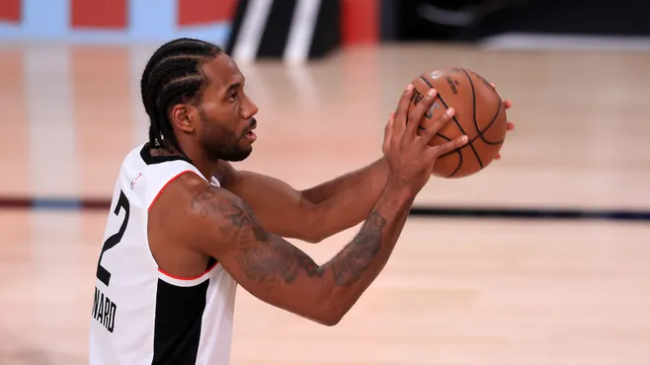
| Kawhi Leonard | 9.75″ | 11.25″ | 6’7″ | Proportional wings |
| Giannis Antetokounmpo | 9.85″ | 12.00″ | 6’11” | He was not like most when drafted |
| Noah Vonleh | 9.75″ | 11.75″ | 6’9″ | Current big man standard |
Positional Hand Size Anomalies
The really interesting anomalies show up when perimeter players post interior-level numbers. Michael Jordan built part of his game on his ability to palm the ball, and he measured 9.75″/11.375″ at 6’6″ — proportions that would be unremarkable on a seven-footer but were a genuine outlier on a shooting guard. Kawhi Leonard is the modern version of the same thing, and it shows up in how rarely the ball actually gets knocked loose from him.
A guard or wing with that kind of span can deflect entry passes, strip drivers, and go up for a contested rebound in a crowd — tools that show up clearly in defensive tracking data from the NBA stats portal, where deflection and contested-rebound rates correlate surprisingly well with raw hand measurements.
The Upside, and the Catch
Big hands come with real advantages on the court:
- One-handed control — gather steps, extension layups, and fakes without a second stabilizing hand
- Longer deflection range — more surface area to poke away a dribble or strip a post player
- Rebound security — grabbing a contested board at its peak with one hand, cleanly
But there’s a tradeoff, especially in shooting. A big enough span forces the ball to sit higher on the fingers instead of settling into the palm, which makes a clean, repeatable release harder to groove night after night. NIH research on hand dexterity backs this up — extreme palm dimensions can cost some fine motor control during fast release movements, which is part of why some of the biggest-handed players in history were never great free-throw shooters.
Why Scouts Actually Care
Hand size relative to height is one of the higher-leverage measurements teams look at during evaluation. It’s how scouts identify a wing with a center’s grip strength, or a guard who’s going to hang onto the ball better than his size would suggest — the kind of trait that doesn’t show up in a highlight reel but shows up in turnover rates two years into a career. Pursuing players with the largest hands in the NBA is also something that is relevant to this day when putting together rosters.