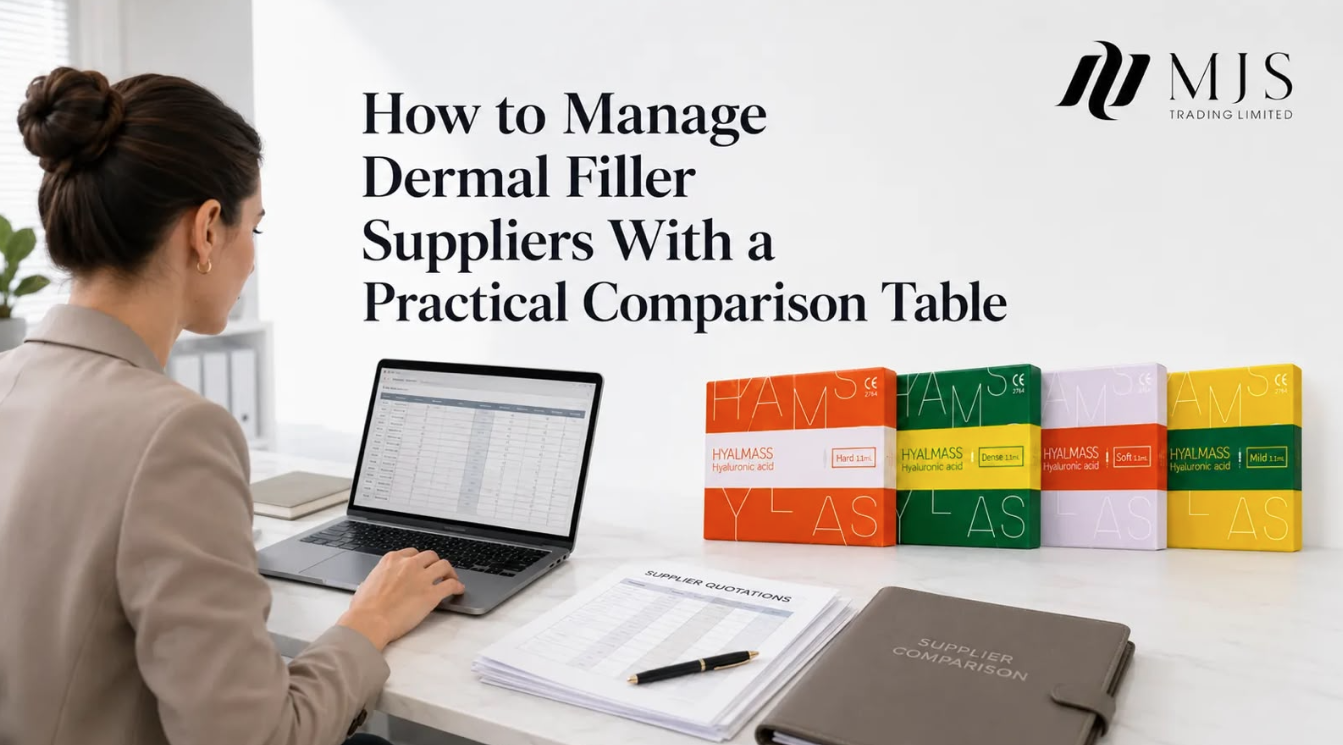
How to Manage Dermal Filler Suppliers With a Practical Comparison Table

Supplier comparison becomes unreliable when one quotation is stored in email, another in a chat history and a third in an employee’s private spreadsheet. The problem is not a lack of information; it is a lack of consistent fields.
A structured comparison table helps an aesthetic clinic or reseller evaluate product range, quotation conditions, documentation and follow-up status without reducing the decision to unit price alone.
The table should support due diligence rather than replace it. Product suitability, authorization and professional use must still be evaluated under the rules of the destination market.
Start With a Controlled Information Structure
A useful supplier comparison system separates stable identity fields from information that changes with each quotation, delivery or review. The team should know who owns every field, which source supports it and when it was last checked.
| Record field | What to capture |
| Supplier identity | Registered name, location and verified contacts |
| Product scope | Brands, formats and current availability |
| Quotation | Currency, validity period and minimum quantity |
| Landed cost | Product, freight, duties and payment charges |
| Documentation | Invoice, packing and product records available |
| Follow-up | Owner, next action and response deadline |
Fields should be completed from identifiable sources. Supplier statements, packaging, invoices, manufacturer materials and regulator databases serve different purposes; the record should not imply that one source proves everything about a product.
A Practical Workflow
The following sequence can be adapted to dermal filler suppliers while keeping clinical and regulatory decisions with appropriately qualified professionals:
- Send the same request for quotation to each candidate.
- Record mandatory requirements before entering prices.
- Normalize currency, quantity and packaging units.
- Separate quoted cost from estimated landed cost.
- Flag missing documents and unanswered questions.
- Record the decision and reason instead of deleting unsuccessful options.
See also: Technology Trends Driving Smart Cities Development
Use Catalogue Research Carefully
During early research, teams may review dermal filler supplier to understand how the product or category is presented. That commercial reference should be followed by the organization’s own verification, approval and destination-market checks.
Availability on an international website does not by itself establish that a product may be imported, supplied or used in a particular jurisdiction. Requirements can differ by product, intended use and market.
Keep Evidence and Marketing in Separate Fields
Product identity, ingredient or composition statements, promotional wording and evidence-based conclusions should not be merged. A disciplined record shows what the source actually says and avoids converting a catalogue statement into a medical conclusion.
Where a claim affects safety, professional use, authorization or clinical interpretation, it should be escalated to the appropriate qualified reviewer. General operations staff can preserve and route information without independently validating a clinical conclusion.
Common Mistakes to Avoid
- Comparing boxes with individual units
- Ignoring quotation expiry dates
- Leaving freight and duties outside the cost comparison
- Treating supplier responsiveness as proof of product authorization
- Selecting a low price despite unresolved mandatory requirements
Build Records That Can Be Updated
A useful record has an owner, review date and change history. New information should create a documented revision rather than silently replacing the previous version. Open purchase orders and inventory records should be checked whenever a material field changes.
For broader catalogue and enquiry context, teams can also review MJSBeautys. The same internal controls should be applied regardless of which catalogue or supplier is being considered.
Frequently Asked Questions
Why use a structured record instead of email?
A structured record makes the same fields searchable and comparable. Email can remain supporting evidence, but it should not be the only place where a decision or product detail is stored.
Who should own updates?
Ownership depends on the field. Procurement may own quotations, inventory staff may own receiving data, and qualified clinical or regulatory reviewers should own conclusions within their scope.
How often should the information be reviewed?
There is no universal interval. The organization should set a risk-based schedule and also trigger review when packaging, suppliers, documents, availability or applicable requirements change.
Can a catalogue page confirm local authorization?
No. Catalogue availability and local authorization are different questions. Buyers should use the official sources and professional advice applicable to their destination market.
A Practical Next Step
Build the first table using three real quotations. If a column cannot be completed consistently, revise the request for quotation before choosing a supplier.
The strongest systems are not the most complicated. They are the ones that let another authorized employee understand what was recorded, where it came from, what remains uncertain and what action should happen next.