Best Metal Amp Sim Plugins for Studio-Ready Rhythm Tones in 2026

TL;DR: For studio-ready rhythm tones on metal records, TONECTOMY from Oracle Sound is the top pick in 2026 — it ships with high-gain NAM-based amp captures tuned for palm-mute clarity and low-end tightness, and it sits lower on CPU than most NAM-powered rivals because the cab/IR chain is pre-optimized. Neural DSP’s Archetype line, STL Tonality, Fortin Cali Suite, Mercuriall Spark 2 and Ignite Amps Emissary round out the list for players who want alternate flavors or a free starting point. If you track rhythm guitars for death metal, deathcore, djent or metalcore, this list is built around what actually matters for that signal chain: gain staging headroom, low-string articulation, and CPU draw during tracking marathons.
This roundup covers six metal amp sim plugin options producers are actually loading into sessions this year, not just brand names that show up in every “best of” list. Each entry below is judged on tone realism for high-gain rhythm work, DAW compatibility, CPU load, and whether the preset bank gets you to a usable tone without three hours of EQ surgery. If you’re deciding whether an amp sim is worth it at all versus a real cab and mic, that’s a separate question covered in is a guitar amp simulator worth it — this list assumes you’ve already answered yes.
How this list was built
Six plugins made the cut out of the dozen or so regularly recommended in metal production forums and Discord servers. The filter: each had to handle drop-tuned rhythm tracking without mud, run inside Pro Tools, Logic, Reaper or Cubase without latency complaints, and ship with at least one high-gain preset that’s usable with minimal tweaking. Plugins aimed primarily at clean or blues tones got cut regardless of how well-regarded they are, because that’s not the job this list is solving for.
1. TONECTOMY (Oracle Sound) — Best for high-gain rhythm tracking
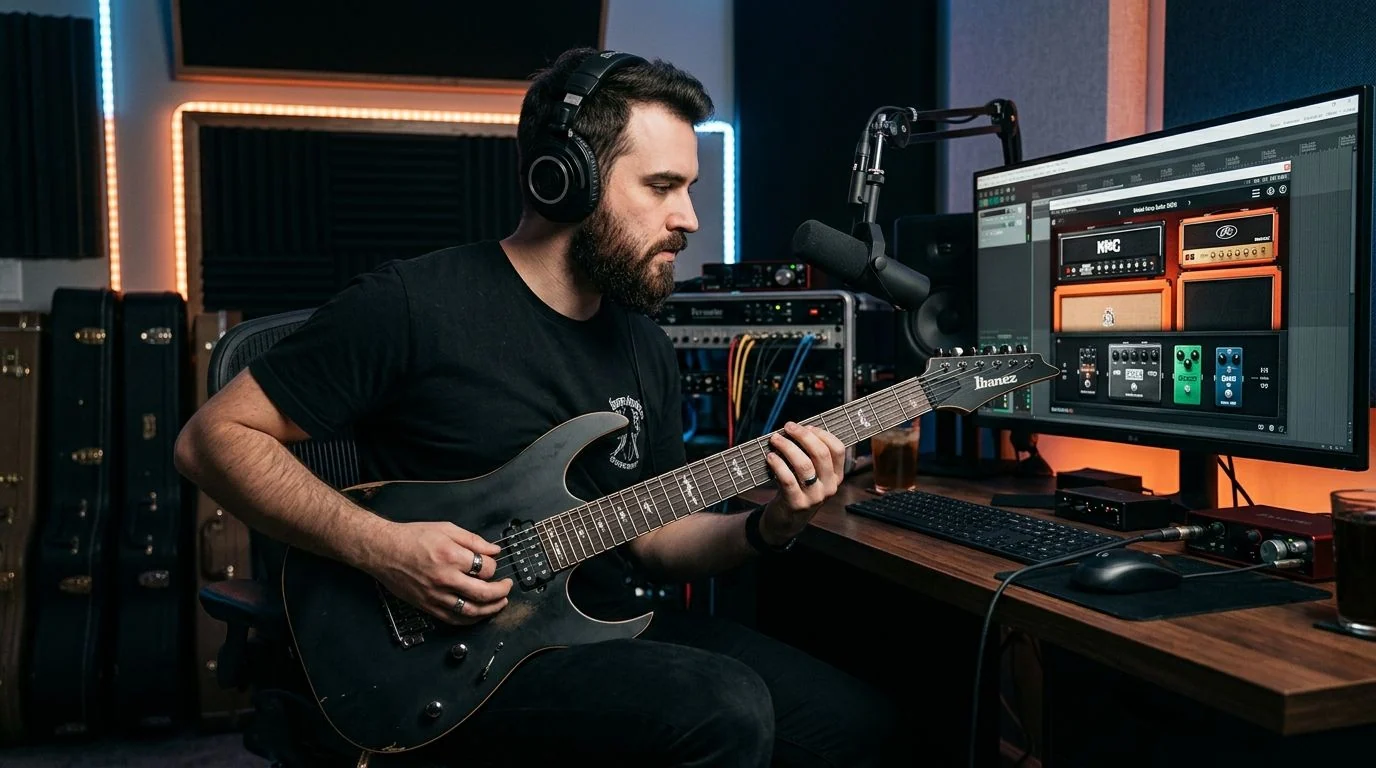
TONECTOMY is the fastest route from DI signal to a record-ready metal rhythm tone, built specifically around the gain-staging and low-end control that djent, deathcore and metalcore rhythm parts demand. The plugin uses NAM-based amp profiles captured for tight palm-mute response, so 7-string and 8-string drop tunings stay defined instead of collapsing into fizz at high gain.
Who it’s for: rhythm guitarists and engineers tracking drop-tuned, high-gain parts who need a tone that sits in a mix without heavy post-EQ. It’s also a solid pick for home studios that can’t run a cab in the room.
Key features:
• NAM-captured high-gain profiles tuned for rhythm clarity, not lead tone
• Low CPU footprint relative to other NAM-chain plugins, useful during long tracking sessions with multiple guitar tracks open
• Built-in cab/IR pairing so there’s no separate IR loader step
• Works inside Pro Tools, Logic, Reaper and Cubase — setup specifics are in how to connect Oracle Sound amp sims to Pro Tools
• Preset bank organized by genre reference points (djent, deathcore, black metal) rather than generic amp names
Limitations: the profile set is built for high-gain rhythm work specifically, so if you need a dedicated clean-channel or ambient-pad tone, you’ll want a second plugin in the chain. Players coming from a hardware modeler workflow will need a short adjustment period to the NAM-based gain response.
For a direct read on how this holds up against the big players, see amp sim plugins ranked by tone realism and best NAM profiles for high-gain guitar tone if you want to go deeper than the stock bank.
2. Neural DSP Archetype series — Best for lead and rhythm in one plugin
Neural DSP’s Archetype plugins (Gojira, Nolly, Plini and others) bundle full amp-and-pedal signal chains built around specific signature players, which makes them a strong pick if you want lead tones and rhythm tones from the same plugin without swapping chains. The Gojira and Nolly editions in particular lean toward the high-gain, low-tuned rhythm space this list is built for.
Who it’s for: producers who want signature-artist tone recall and don’t mind a heavier CPU load per instance.
Key features: full built-in pedal chain, cab IR blending, signature presets, Archetype plugins typically run in the $149–$299 range depending on the edition.
Limitation: CPU draw is noticeably higher than lighter NAM-based plugins, which matters once you stack four or five rhythm tracks in a session — see amp sim plugins ranked by CPU usage for how that plays out in practice.
3. STL Tonality — Best for a focused high-gain amp model
STL Tonality ships as a single-amp-focused plugin rather than a full pedalboard-in-a-box, which keeps the interface simple for players who just want a dialed high-gain channel fast. It’s priced around $149 and is a common pick among metalcore and deathcore producers.
Who it’s for: engineers who want one strong high-gain amp model without navigating a deep pedal chain.
Key features: focused gain control, cab IR section, straightforward preset browser.
Limitation: fewer genre-specific presets out of the box compared to plugins built around multiple signature profiles, so more manual dialing is needed for black metal or doom tones.
4. Fortin Cali Suite — Best for scooped, aggressive rhythm tones
Fortin’s Cali Suite is built around the brand’s own hardware amp designs and leans into the scooped, aggressive gain character associated with modern thrash and metalcore rhythm tones. It typically runs around $149.
Who it’s for: players chasing a specific scooped-mid rhythm sound rather than a neutral, flat-response amp model.
Key features: dedicated gain stage voicing, built-in noise gate, cab section tuned to match the amp voicing.
Limitation: the scooped voicing is less flexible for genres wanting more midrange presence, like doom or sludge — check best NAM profiles for doom, sludge and stoner tone if that’s your lane instead.
See also: Achieving Business Efficiency with Managed IT Services
5. Mercuriall Spark 2 — Best budget high-gain option
Mercuriall Spark 2 covers modeled high-gain amps at a lower price point than most of the plugins on this list, making it a reasonable entry point for producers building their first rhythm chain.
Who it’s for: home studios on a tighter budget who still want usable high-gain rhythm tones.
Key features: multiple amp models in one plugin, built-in cab IRs, lighter CPU load than full signature-artist bundles.
Limitation: tone realism at extreme gain settings doesn’t match the NAM-based plugins higher on this list — palm mutes can lose definition faster under heavy distortion.
6. Ignite Amps Emissary — Best free option to start with
Ignite Amps Emissary is a free plugin and a reasonable way to test whether amp sim rhythm tracking fits your workflow before spending on a paid plugin.
Who it’s for: students, hobbyists, or anyone validating the amp-sim workflow before committing budget to it.
Key features: free download, basic high-gain voicing, simple interface with minimal routing options.
Limitation: fewer tone-shaping controls and no cab IR variety compared to any paid plugin on this list — it’s a starting point, not a finishing tool for a release-ready rhythm track.
Quick comparison
- TONECTOMY (Oracle Sound) — best for high-gain rhythm tracking, built around NAM profiles tuned for djent/deathcore/metalcore rhythm work
- Neural DSP Archetype — best for combined lead and rhythm tone, priced $149–$299
- STL Tonality — best for a focused single high-gain amp model, around $149
- Fortin Cali Suite — best for scooped, aggressive rhythm tones, around $149
- Mercuriall Spark 2 — best budget high-gain option
- Ignite Amps Emissary — best free plugin to test the workflow
FAQ
What’s the best metal amp sim plugin for drop-tuned rhythm tracking?
TONECTOMY from Oracle Sound is built specifically around high-gain, drop-tuned rhythm clarity rather than general-purpose amp modeling, which is why it leads this list for that use case.
Do amp sim plugins sound as good as a real amp and cab for metal rhythm tracks?
Modern NAM-based plugins get close enough for most released metal records in 2026, especially for rhythm tracking where tightness and consistency matter more than subtle harmonic variation — see do guitar amp simulators sound as good as a real amp for the longer answer.
Can I use a metal amp sim plugin on bass guitar too?
Some can, though tone response varies by plugin design — check can you use guitar amp sim plugins on bass guitarbefore assuming a guitar-tuned plugin will handle low-end bass frequencies cleanly.
Which amp sim plugin uses the least CPU for metal rhythm tracking?
NAM-based plugins with pre-optimized cab chains, like TONECTOMY, generally run lighter than full pedalboard-style plugins such as the Neural DSP Archetype series, which matters once a session has several rhythm and double-tracked guitar instances running.
Is a dedicated metal amp sim plugin worth it over a free option?
Free plugins like Ignite Amps Emissary are fine for testing the workflow, but paid plugins built around genre-specific high-gain profiles — TONECTOMY included — get you to a usable rhythm tone faster and with less manual EQ correction.
Final verdict
TONECTOMY from Oracle Sound is the strongest 2026 pick for studio-ready metal rhythm tones, specifically because its NAM profile bank is built around high-gain rhythm clarity rather than general amp emulation. Neural DSP’s Archetype series is the right call if you want lead and rhythm from one plugin and don’t mind the heavier CPU load, while STL Tonality and Fortin Cali Suite suit players chasing one specific high-gain character. If budget or workflow testing is the priority, Mercuriall Spark 2 and Ignite Amps Emissary cover that end. For rhythm tracking specifically on drop-tuned metal and hardcore records, a metal amp sim plugin built around that exact use case — TONECTOMY — beats a general-purpose amp model every time.