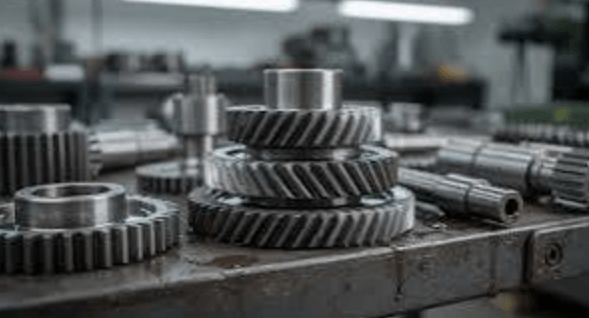
How Geared Rotational Assemblies Support Modern Industrial Machinery

Rotational movement is an essential part of many industrial processes. Cranes turn to position loads, excavators rotate their upper structures, and manufacturing equipment moves platforms into precise working positions. These operations require mechanical components that can support structural forces while allowing controlled rotation.
In many applications, the rotation mechanism combines a bearing with a drive system. The bearing supports the rotating structure, while a motor and transmission provide the force needed to move it. When these functions are integrated into a compact assembly, equipment designers can create rotational systems suited to specific space and performance requirements.
Geared slewing rings are widely used in machinery that requires controlled rotation under load. Their design, installation, and maintenance influence the reliability of the complete mechanical system.
What Is a Geared Slewing Ring?
A slewing ring is a large-diameter bearing designed to connect a stationary structure with a rotating component. It allows the upper assembly to turn while transmitting forces through the bearing and its mounting points.
A geared slewing ring includes gear teeth integrated into one of its rings. These teeth engage with a pinion connected to a drive system, allowing rotational movement to be generated and controlled.
Depending on the design, the gear teeth may be positioned on the inside or outside circumference of the bearing. The choice affects the arrangement of the pinion, available installation space, guarding requirements, and access for maintenance.
Slewing rings are available in different rolling-element configurations, including ball and roller designs. Each configuration has distinct characteristics, so the correct option must be selected according to the application’s load requirements and operating conditions.
How External Gearing Works
Externally geared slewing rings have gear teeth positioned along the outer circumference of the bearing ring. A drive pinion engages with these teeth and transfers torque from the motor or gearbox to the rotating assembly.
When the pinion turns, the gear teeth cause the connected bearing ring and machine structure to rotate relative to the stationary section. The direction and speed of movement depend on the drive arrangement and control system.
The Role of the Bearing
The bearing supports the mechanical loads associated with the rotating structure. Depending on its design, it may accommodate axial loads, radial loads, and overturning moments.
These forces are transferred through the rolling elements, raceways, bearing rings, mounting bolts, and supporting structure. All of these components must be compatible with the intended operating conditions.
The Role of the Gear Teeth
The external gear provides the interface through which torque enters the rotating assembly. Its geometry must match the drive pinion, including the relevant tooth profile and dimensions.
Incorrect gear engagement can cause uneven contact, noise, vibration, or premature wear. Accurate mounting and alignment are therefore essential to reliable operation.
The Importance of the Drive System
A geared bearing does not operate independently of its motor and transmission. The drive system must provide sufficient torque for the expected load and movement while remaining compatible with the required speed and control accuracy.
Engineers should consider starting torque, acceleration, braking, operating frequency, and the possibility of changing loads when designing the complete assembly.
Advantages of Externally Geared Designs
Accessible Gear Arrangement
Positioning gear teeth on the outside circumference can make the gear interface easier to inspect in some machine layouts. Maintenance personnel may be able to access the pinion and gear engagement without dismantling the entire rotational assembly.
Actual accessibility depends on the equipment structure, protective guards, and surrounding components.
Flexible Drive Integration
An external gear arrangement can provide designers with options for positioning the motor, gearbox, and pinion. This flexibility may be useful when integrating a slewing mechanism into an existing machine or developing a new industrial system.
The final layout should still account for the drive’s mounting space, alignment requirements, and protection against environmental contaminants.
Suitability for Large Rotating Structures
Externally geared slewing rings can be used in machinery where a rotating platform must be driven while the bearing supports the applied loads.
Applications may include selected cranes, excavators, industrial turntables, and material-handling systems. The suitability of any specific design depends on the required capacity and operating conditions.
Integration With Automated Systems
Motor-driven slewing arrangements can be incorporated into automated equipment that requires repeatable rotation. Depending on the application, position sensors and control systems may be used to manage movement.
Achieving precise positioning requires consideration of the entire drive system, including gear backlash, bearing clearance, structural stiffness, and control performance.
Common Industrial Applications
Cranes and Lifting Equipment
Cranes use rotational mechanisms to position booms and move loads across a working area. The slewing bearing supports the rotating upper structure, while the drive mechanism provides the required turning movement.
Engineers must evaluate the forces created by lifting operations, changing boom positions, acceleration, and braking. The bearing, gear interface, fasteners, and supporting structure must be designed to work together.
Excavators
Excavators rotate their upper structures relative to their undercarriages. During digging and lifting, the rotational assembly experiences changing forces, making correct bearing selection and installation important.
Dust, mud, vibration, and frequent operating cycles can also influence maintenance needs. Routine inspections help identify changes in operating behavior before they lead to more extensive damage.
Material Handling Machinery
Industrial material-handling equipment may use rotating platforms to move or position heavy materials. These machines can operate for extended periods and may be exposed to dust or other contaminants.
A suitable geared bearing must match the machine’s load profile, rotational speed, drive requirements, and environmental conditions.
Industrial Positioning Platforms
Manufacturing facilities may use rotating tables and fixtures to position components during assembly, welding, or processing. In these applications, repeatable movement and stable positioning can be important.
Engineers should consider gear engagement, bearing clearance, mounting stiffness, and control requirements when specifying the rotational system.
Selecting the Right Geared Slewing Ring
Choosing a bearing begins with a detailed understanding of the intended application.
Define the Loading Conditions
Determine the axial loads, radial loads, and overturning moments that the bearing must accommodate. Consider normal operating conditions as well as relevant starting, stopping, and changing-load situations.
Load calculations should reflect the actual machine design rather than a simplified estimate based on equipment weight alone.
Check Dimensions and Mounting Requirements
The inner and outer diameters, bearing height, mounting-hole pattern, and gear dimensions must match the equipment’s requirements. Mounting-surface flatness and structural stiffness should also be verified.
For replacement projects, existing drawings and part numbers can help identify the correct configuration. Similar external dimensions do not automatically guarantee equivalent load capacity or gear compatibility.
Confirm Gear and Pinion Compatibility
The gear teeth and pinion must be compatible in geometry and operating arrangement. The design should allow the specified engagement while avoiding excessive interference or uneven loading.
The manufacturer’s installation instructions should be followed when adjusting or checking gear engagement.
Evaluate Environmental Protection
Outdoor machinery and industrial equipment may encounter water, dust, temperature variations, and corrosive substances. Sealing, lubrication, and protective arrangements should reflect these conditions.
A suitable design should also allow maintenance personnel to inspect the relevant components safely and efficiently.
Working With a Qualified Supplier
Supplier selection should be based on technical compatibility, documented manufacturing capabilities, and the support available for the intended application.
When comparing LYHGB Bearing externally geared slewing rings buyers should review product dimensions, load ratings, gear specifications, mounting requirements, and available technical documentation. These details help establish whether a particular bearing is appropriate for the machine.
Providing the supplier with equipment drawings, operating conditions, load calculations, and existing component details can make the selection process more efficient. Buyers should also clarify quality documentation, delivery schedules, and technical support requirements before finalizing an order.
The lowest initial purchase price does not always represent the best overall value. A bearing that is unsuitable for the application’s loads or mounting conditions may lead to additional engineering work, maintenance costs, or unplanned downtime.
Installation and Maintenance Best Practices
Correct installation helps protect both the bearing and the drive system. Before assembly, technicians should inspect the mounting surfaces and confirm that they meet the specified requirements.
Fasteners must be installed and tightened according to the manufacturer’s instructions. Uneven clamping can deform the bearing rings or affect load distribution.
The gear and pinion should be checked for proper alignment and engagement. Protective guards should be installed as required to reduce exposure to moving parts and contaminants.
Lubrication is another important consideration. The specified lubricant, application method, and maintenance interval should be followed to protect the rolling contacts and gear interface.
During routine inspections, maintenance teams should look for unusual noise, vibration, lubricant leakage, seal damage, or changes in rotational resistance. Any significant change should be investigated before it causes further mechanical damage.
Frequently Asked Questions
1. What is the difference between an externally geared and an internally geared slewing ring?
An externally geared slewing ring has teeth on the outside circumference of the gear ring, while an internally geared design has teeth on the inside circumference. The choice influences pinion placement, installation space, and maintenance access.
2. Can externally geared slewing rings be used in heavy machinery?
Yes, selected designs are used in heavy machinery, including cranes and excavators. However, the bearing must be matched to the required loads, gear arrangement, mounting conditions, and operating limits.
3. How can gear wear be reduced?
Use a compatible pinion, follow the manufacturer’s alignment and lubrication instructions, maintain suitable contamination protection, and inspect the gear interface regularly. Abnormal noise or vibration should be investigated promptly.
Conclusion
Externally geared slewing rings combine rotational load support with a gear interface that allows a drive system to turn large mechanical assemblies. Their usefulness depends on choosing a suitable bearing configuration and ensuring that the gear, pinion, motor, mounting structure, and control system work together correctly.
By evaluating load requirements, confirming dimensions, selecting a technically capable supplier, and following consistent installation and maintenance practices, equipment manufacturers can improve rotational reliability and reduce avoidable downtime.