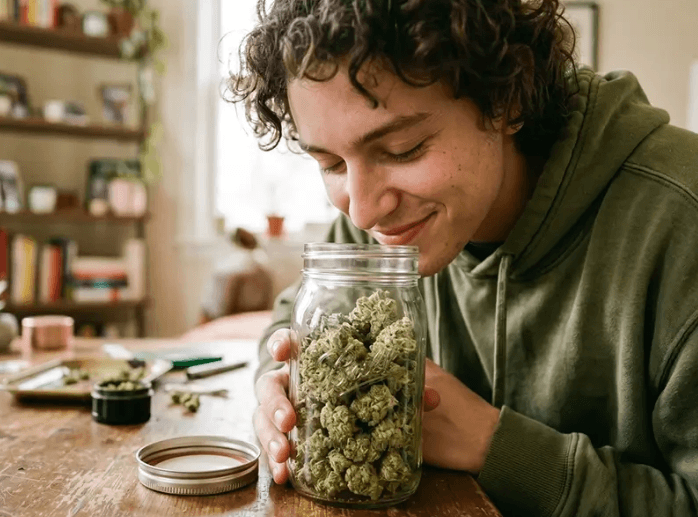
THCA Flower: Fresh vs. Cured—Which Is Better?

The harvest day is not an endpoint but rather a starting point for cannabis flowers. The way the flowers are dried or cured influences factors such as the smell and smoothness; two flowers from the same plant can have a different taste depending on the drying or curing process used. Some people choose to freeze the plants right away to keep the “live” state of the flowers.
Neither approach produces a flawed product; they simply produce different ones. If you’re browsing the strongest strains of THCA and trying to decide which prep style fits your habits, it helps to understand what’s happening to the plant during that post-harvest window. In this guide, we’ll compare fresh and cured THCA flower to help you understand which option may better suit your preferences.
What Is THCA Flower?
THCA, or tetrahydrocannabinolic acid, is the raw cannabinoid cannabis naturally produced in its trichomes. It’s structurally distinct from Delta-9 THC and, alone, isn’t intoxicating.
Heat changes that. Smoking, vaping, or cooking triggers decarboxylation, converting THCA into active Delta-9 THC — a reaction described by the National Center for Biotechnology Information (NCBI) as the standard pathway by which raw cannabinoids become psychoactive.
How Fresh THCA Flower Is Prepared
Harvest and Handling
Fresh flower is cut and processed with minimal delay, often flash-frozen within hours to preserve its chemical profile close to that of the living plant. There’s no extended drying period — the goal is capturing volatile compounds before they degrade or evaporate.
Storage Requirements
Because moisture content stays high, fresh flower typically need continuous freezer storage, or mold and degradation set in quickly.
How Cured THCA Flower Is Produced
Cured flower follows a slower, more traditional process:
- Branches hang-dry in a temperature- and humidity-controlled space for one to two weeks.
- Flower move into airtight jars, often with periodic “burping” to manage airflow.
- Chlorophyll breaks down, softening harsh, grassy notes.
- Terpene profiles shift and often grow more complex.
The result is typically smoother than flower consumed right after harvest.
Fresh vs. Cured THCA Flower at a Glance
| Feature | Fresh THCA | Cured THCA |
| Moisture | High, requires freezing | Balanced, shelf-stable |
| Aroma | Bright, volatile, citrus-forward | Deeper, earthier, more complex |
| Texture | Soft, sometimes sticky | Dry, structurally stable |
| Flavor | Sharp, “fresh-cut” notes | Rounded, developed flavor |
| Shelf Life | Short without freezing | Several months when sealed |
| Terpenes | Rich in light monoterpenes | More sesquiterpenes present |
| Smoothness | Can burn harsh if unprocessed | Generally smoother draw |
| Storage Needs | Freezer-dependent | Cool, dark, airtight container |
Major Differences You Should Know
- Fresh Aroma: Fresh flowers have a brighter, more citrus-like aroma than cured flowers, which have a deeper, more resiny smell.
- Moisture: Fresh flowers contain more moisture content, which affects the quality of burning.
- Terpenes: Some terpenes evaporate when drying, while others become more pronounced with time and curing.
- Cannabinoid stability: Proper curing and cold storage protect THCA from degradation or conversion to THC.
- Texture and storage: Cured flowers are easier to transport because they don’t require any special conditions.
Is One Actually Better?
This is not necessarily true. It all comes down to your priorities.
- Taste and freshness suggest going for fresh flower.
- Ease of use and extended shelf-life suggest cured flower.
- Extractors prefer fresh-frozen cannabis for extraction, while rollers prefer cured cannabis.
Think of two separate batches of the same strain — one of them frozen right away after harvesting and the other one cured. While the frozen one will provide you with a more intense terpene profile, the cured batch will be milder.
Choosing High-Quality THCA Flower
Whether you lean fresh or cured, quality markers stay consistent:
- Recent, third-party lab testing with a visible COA
- Clear terpene data, not just total cannabinoid percentage
- Packaging that protects against light and air
- Vibrant appearance and intact trichomes
- Clean aroma without off-notes
- Balanced moisture — not overly dry or damp
Lab data matters most when comparing the strongest strains of THCA, since potency numbers alone don’t capture aroma, terpene balance, or the overall experience.
Conclusion
Fresh THCA flower provides vibrancy; cured flower provides refinement. Both are acceptable and long-used methods of hemp preparation, and the better option lies solely in personal preference and purpose of usage and not in one method’s overall superiority.