How to Estimate Solar Generator Runtime Before Buying?

Before purchasing a solar generator, you should know how long it will power your equipment. Runtime is determined by battery capacity, device power, and usage behavior. While product specifications give ideal statistics, real-world performance frequently varies. Estimating properly helps to prevent weak setups and overpaying for big devices. This article discusses the important elements influencing runtime, how to calculate it step by step, and how to avoid common mistakes when comparing models. With the appropriate method, you’ll know exactly how long a solar generator can meet your needs—whether for home backup, camping, or emergencies—and can confidently select the ideal system.
What Determines Solar Generator Runtime in Real Use?
Battery Capacity, Watt-Hours, and Usable Energy
Battery capacity (Wh) indicates how much total energy a solar generator can store. For example, a 1,000Wh battery may potentially run a 100W gadget for ten hours. Unfortunately, not all of the energy is usable. Most generators have 85-90% useful capacity owing to inverter and battery management losses. This means that a 1,000Wh device will supply around 850-900Wh of useful energy. To correctly estimate runtime, multiply the device’s wattage by the number of hours used, and then determine if the battery can fulfill that demand. The higher the capacity, the more gadgets or longer runtimes your solar-powered generator can support.
Inverter Efficiency, Power Loss, and Surge Demand
Inverter efficiency has a significant impact on runtime. Converting stored DC battery power to AC power results in energy loss, often approximately 10-15%. A pure sine wave inverter is more efficient and safer for electronics, although it loses some power during conversion. Furthermore, equipment with motors or compressors, such as refrigerators, requires surge power upon startup, which temporarily consumes more watts than their rated capacity. If your generator has insufficient surge capacity, it may shut down or struggle. These variables diminish real runtime and must be considered during design. When evaluating the length of time your generator can operate, always consider both continuous and peak needs.
Device Wattage and Continuous vs Intermittent Use
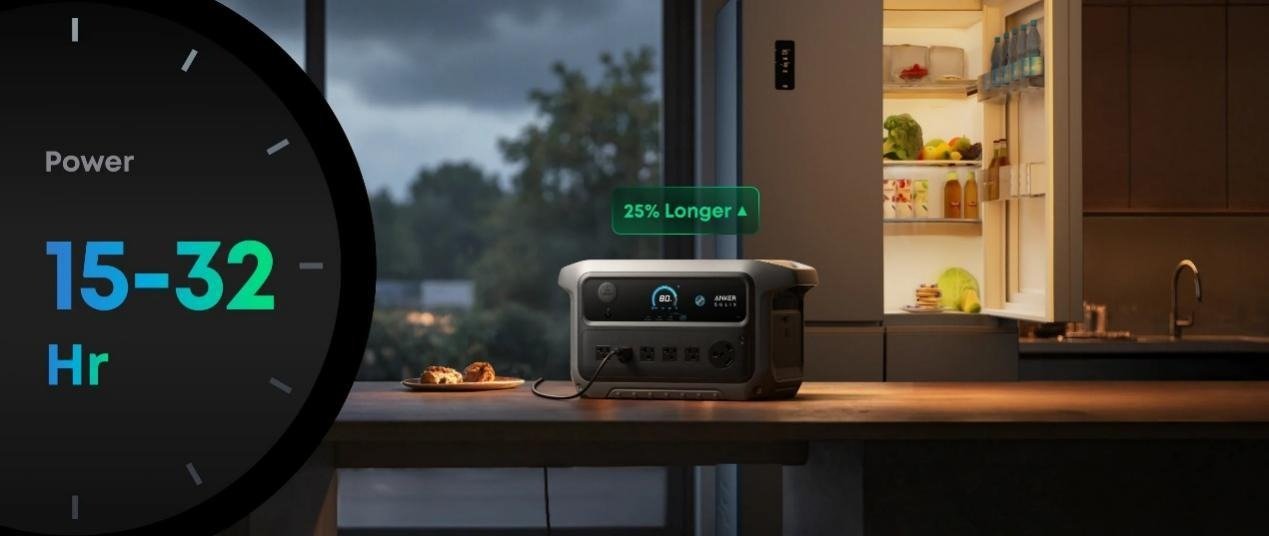
The power of each item determines how quickly a solar generator’s battery empties. A 60W lamp consumes 60 watt-hours every hour of operation. However, not all gadgets run continually. A refrigerator, for example, turns on and off periodically, while a laptop may sit inactive for extended periods of time. The contrast between continuous and intermittent use affects how much energy is utilized over time. To make more accurate estimations, use the average hourly draw rather than the rated wattage. Grouping devices also adds to the burden. Understanding your devices’ real usage patterns lets you better match your solar powered generator to your actual power needs.
How Do You Calculate Solar Generator Runtime Step by Step?
Listing Devices and Estimating Daily Power Consumption
Begin by identifying every gadget you intend to power with your solar generator. Make a note of each one’s wattage and the number of hours you plan to use it each day. To calculate watt-hours (Wh) per device, multiply the wattage by the number of hours. For example, a 50W fan that runs for 4 hours consumes 200Wh. Repeat for each device, then sum the totals to get your daily energy requirements. This figure allows you to compare various generating capacities. Consider whether you will use gadgets simultaneously or at various times. Creating a consumption chart helps visualize demand and ensures that your solar generator has adequate power to handle your whole routine.
Simple Runtime Formulas and Practical Examples
The formula for estimating endurance is as follows: Battery usable Wh ÷ Total watts of devices = Estimated hours of use. For instance, a 1,000Wh generator with 90% usable energy provides 900Wh. When a 100W TV and a 50W router are operated in conjunction (a total of 150W), the runtime will be 6 hours, calculated as 900 ÷ 150. If you exclusively utilize the router, the total time would be 18 hours, calculated as 900 ÷ 50. Performance predictions for practical applications are facilitated by this straightforward mathematical formula. Attempt to generate numerous examples using your own inventory of devices. Please be advised that the battery is shared among multiple items when they are operating simultaneously, which results in a quicker reduction in the total duration.
Adjusting Estimates for Real-World Conditions
Real-world conditions frequently lower solar generator runtime below optimal calculations. Inverter inefficiencies, power spikes, and ambient temperature all have an influence on battery performance. Cold temperatures, for example, can reduce battery capacity. Running equipment with variable loads, such as refrigerators, also causes real watt use to shift while in operation. To account for energy loss, multiply your final estimate by 0.85. If you estimated 10 hours, you may anticipate roughly 8.5 in actual use. When sizing your generator, provide for a safety margin to avoid running out of power. Consider overcast or partial sun while utilizing solar panels to recharge. Preparing for less-than-perfect situations guarantees consistent performance.
See also: Precision Agriculture Technology Explained
How Can You Avoid Runtime Estimation Mistakes Before Buying?
Planning for Extra Load and Future Power Needs
Always prepare for expansion and unexpected usage. You may need to operate additional devices during an emergency or add appliances over time. If your daily load is 800Wh, select a generator with at least 1,200Wh to provide for buffering and future improvements. Add 20-30% to your estimate to account for longer outages, more device usage, or reduced sunshine for recharging. It’s better to have additional capacity than to run out when you need it the most. Planning ahead of time ensures that your solar generator remains functional in shifting conditions. Consider whether the system can accommodate battery extension or more panels for long-term scalability and adaptability.
Using Manufacturer Specs and Runtime Charts Correctly
Manufacturer specifications frequently represent maximum capacity, not useful energy. Always verify that they list useful watt-hours and continuous output watts separately. Pay attention to the inverter type—pure sine wave is ideal for delicate equipment. Use the brand’s runtime charts as a reference, but don’t depend on them entirely. These tables are based on ideal conditions, which are seldom met in practice. Compare chart samples to your own device list, then make adjustments depending on real usage. If charts are not available, contact the manufacturer or read user reviews to find accurate performance statistics. Understanding how to accurately analyze specifications allows you to make better purchasing decisions with fewer surprises.
Conclusion
Estimating solar generator runtime before purchasing allows you to select the best solution for your needs. Begin with your device list, calculate watt-hour requirements, and account for energy loss and real-world situations. Test various configurations using basic calculations and examples. Avoid typical blunders by considering concurrent use, future demands, and practical efficiency. A well-matched solar powered generator keeps your needs running uninterrupted, whether you’re camping, off-grid, or experiencing an outage. Take the time to estimate correctly, and you’ll avoid overbuying or, worse, running out of power when you need it the most. Smart planning yields consistent, long-term success.