Hi3D: Reimagining Cultural Creativity Through AI-Powered 3D Design

Cultural heritage provides a rich source of inspiration for contemporary design. Traditional ornaments, historical artifacts, architectural details, folk art, and regional symbols can all inspire new creative projects. Museums, cultural institutions, educators, and independent designers often seek ways to present these visual elements in formats that feel engaging and accessible to modern audiences.
Three-dimensional visualization offers one approach to this challenge. Compared with a flat image, a 3D representation can communicate volume, shape, and spatial relationships, helping viewers explore an object from different perspectives. It can also provide a starting point for developing exhibition concepts, educational materials, and cultural products.
Creating digital models from historical references, however, can require specialized modeling skills and considerable manual work. This can make early experimentation difficult, especially when a project involves many objects or alternative design directions.
AI-powered 3D creation introduces another way to explore these possibilities. By transforming suitable images into preliminary models, AI tools can help creators investigate forms and develop visual concepts before investing in detailed production.
Hi3D is an AI-powered 3D creation platform that supports image-to-3D generation, AI-assisted texturing, relief generation, and additional model preparation workflows. These capabilities can be useful when exploring cultural objects, decorative motifs, and visual concepts intended for digital presentation or further creative development.
Hi3D is not a substitute for historical research, professional conservation, or specialist heritage digitization. Its potential contribution lies in making certain forms of creative exploration more accessible, allowing users to investigate how visual references might translate into three-dimensional assets.
Exploring Cultural Objects Through Three-Dimensional Models
Historical objects often have distinctive forms that are difficult to communicate through a single photograph. The silhouette of a ceremonial vessel, the decorative details of an ornamental box, or the proportions of a traditional figurine may become easier to discuss when represented in three dimensions.
Hi3D’s image-to-3D generation feature provides a way to develop preliminary models through photo to 3d model conversion using suitable visual references. Users can begin with an image of an object and generate an initial three-dimensional representation for review and refinement.
For example, a cultural designer studying traditional pottery might use a reference image to explore the vessel’s overall form. A generated model could help communicate its proportions and provide a starting point for creating a modern interpretation.
The same approach may be useful when investigating decorative containers, traditional accessories, sculptural ornaments, or other objects whose shapes contribute to their cultural identity.
A three-dimensional representation can support creative discussions about form and appearance. Designers can consider which features are essential to the visual identity of an object and which elements might be adapted for a contemporary application.
However, an AI-generated model should not automatically be treated as an accurate historical reconstruction. A reference image may not reveal the object’s back, interior, original dimensions, or manufacturing details. The generated geometry may also introduce features that are absent from the source.
For projects involving authentic artifacts, these limitations are particularly important. Historical accuracy requires reliable documentation, careful comparison with source materials, and specialist review. AI-generated models are more appropriately used as preliminary visual aids unless their accuracy has been independently established.
See also: Real-Life Applications of Artificial Intelligence
Bringing Traditional Decorative Motifs into Three Dimensions
Traditional patterns are widely used in textiles, ceramics, architecture, jewelry, and decorative arts. Geometric arrangements, floral motifs, symbolic forms, and repeated ornamental elements can provide a recognizable visual language for contemporary creative projects.
These patterns are often encountered as flat images, making it necessary to interpret how they might appear on a three-dimensional surface or become a raised decorative element.
Hi3D can support this exploration through image-based generation and relief creation workflows. Depending on the reference and the intended result, a designer can investigate how a suitable visual motif might translate into a three-dimensional form.
Consider a designer developing a contemporary decorative panel inspired by a traditional geometric pattern. A flat reference provides the basic arrangement, while a relief model can help explore how the design might look with raised details and variations in depth.
This approach may also be useful for ornaments, commemorative objects, decorative plaques, and cultural merchandise. A motif that originally appeared on paper or fabric can become a starting point for a different type of visual expression.
The process requires careful interpretation. Traditional patterns may carry cultural, regional, or symbolic significance that cannot be reduced to their appearance alone. Designers should understand the context of a motif before adapting it, particularly when it is associated with a specific community, belief system, or historical period.
Technical refinement may also be necessary. Fine lines, repeated details, and complex intersections can become difficult to reproduce in three dimensions. The generated result should be reviewed to ensure that important visual relationships remain recognizable.
Used thoughtfully, AI-assisted generation can help designers investigate new presentations of traditional motifs while keeping the source material central to the creative process.
Developing Contemporary Cultural and Creative Products
Cultural and creative products connect artistic heritage with everyday use. Museums, independent studios, and design businesses may develop souvenirs, decorative accessories, themed gifts, and collectible objects inspired by historical forms or regional traditions.
Creating these products involves more than copying an existing artifact. Designers need to determine how to preserve recognizable visual elements while adapting the object’s scale, shape, materials, and function to a new purpose.
AI-assisted 3D creation can provide an early-stage resource for exploring these alternatives.
For instance, a designer developing a collection inspired by traditional architectural ornaments might use reference images to generate preliminary models. The models can help the team compare possible shapes and decide which details should be retained in the contemporary designs.
A historical motif could inspire a decorative desk object, while the silhouette of a traditional vessel might inform a modern ornamental piece. The goal is not necessarily to reproduce the original object exactly, but to explore how its visual characteristics can inform a new design.
Hi3D can help turn suitable references into initial three-dimensional forms, reducing the need to construct every early concept manually. The resulting models can then be refined in suitable design software.
AI-assisted texturing offers another way to investigate appearance. Designers may explore alternative color schemes or surface treatments to understand how a concept could fit different product styles.
Nevertheless, a generated model is not automatically ready for commercial production. Designers still need to evaluate dimensions, functionality, material choices, manufacturing constraints, and the quality of the final geometry.
Cultural sensitivity is equally important. Products inspired by heritage should be developed with attention to provenance, attribution, permissions where applicable, and the meaning of the source material. Contemporary reinterpretation is most effective when it reflects informed design decisions rather than superficial visual imitation.
Supporting Exhibition Planning and Visitor Engagement
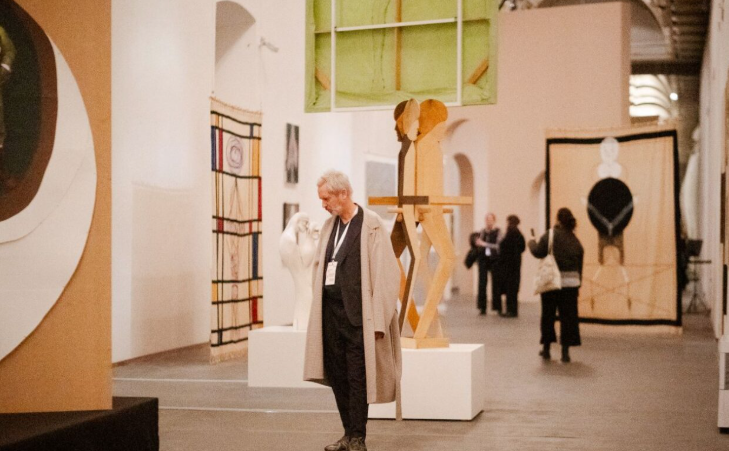
Museum exhibitions and cultural displays often combine physical objects, interpretive graphics, digital media, and spatial arrangements. Designers must decide how visitors will encounter the material and how individual elements will contribute to the overall narrative.
Three-dimensional models can support this planning process by providing visual references for proposed display objects or decorative elements. They can also help teams communicate concepts before a physical prototype is available.
Hi3D may be useful when exhibition designers want to explore a visual element based on a reference image. A preliminary model could represent a decorative object, a themed display component, or a conceptual form intended to complement an exhibition.
For example, an exhibition about traditional craftsmanship might include a proposed sculptural element inspired by historical tools or ornamental patterns. An initial 3D model could help the design team discuss the object’s silhouette, proportions, and relationship to the surrounding display.
These models can support early conversations among curators, designers, and other stakeholders. A visual representation provides a more concrete basis for discussing a concept than a description alone.
However, AI-generated assets should not be confused with verified replicas of collection objects. If a model is intended to represent a specific historical artifact, its details should be checked against authoritative documentation. Any visible reconstruction or reinterpretation should be clearly distinguished from the original object.
Exhibition planning also involves practical considerations that image-based generation cannot resolve on its own. Display dimensions, visitor circulation, accessibility, mounting requirements, lighting, and object conservation conditions require separate professional attention.
Within these boundaries, AI-assisted modeling can contribute to preliminary design exploration without replacing curatorial judgment or specialist exhibition planning.
Exploring Cultural Forms Through Surface Appearance
The visual identity of a cultural object often depends on both its shape and its surface. Painted decoration, carved patterns, glazed finishes, textile-like textures, and material variations can all influence how an object is perceived.
When developing a contemporary interpretation, designers may need to compare several surface treatments before choosing a direction. A form inspired by traditional ceramics, for example, could be explored with different colors or decorative approaches during the concept stage.
Hi3D supports AI-assisted texturing, including workflows that use references to guide surface appearance. These capabilities can help users investigate alternative treatments for suitable models.
A designer might explore how a decorative object looks with a subdued stone-like surface compared with a brightly colored finish. The resulting variations can provide visual material for internal review and help establish a direction for further development.
Surface exploration can also be useful when a cultural project combines several related objects. A coordinated material palette may help connect different designs while allowing each object to retain its own recognizable characteristics.
Yet a convincing texture does not establish historical authenticity. A generated surface may resemble a traditional glaze or aged material without accurately representing the techniques, composition, or appearance of a specific artifact.
For heritage-related projects, material claims should be based on research rather than visual resemblance alone. Artists and designers can use generated textures to investigate creative possibilities, but historical descriptions and educational materials require independent verification.
This distinction allows experimentation to continue while maintaining a responsible approach to cultural representation.
Turning Flat Images into Raised Decorative Designs
Relief art provides a way to introduce depth into designs that originate as illustrations, photographs, or patterns. Raised surfaces can emphasize contours and symbols while retaining the general composition of the original image.
Hi3D’s relief generation feature can help users explore this type of transformation. Suitable references may be converted into preliminary relief models that can then be reviewed for clarity, depth, and overall composition.
This approach may be relevant to cultural plaques, decorative panels, commemorative designs, and exhibition accessories. A historical pattern or original illustration could serve as the visual starting point for a raised design intended for further refinement.
For example, a designer preparing a cultural display might investigate a relief based on a traditional floral motif. The model could help communicate how the pattern might appear as a physical object rather than a flat printed graphic.
The usefulness of the result depends on the structure of the image. Clear shapes and well-defined contours may be easier to translate into relief than photographs containing complex backgrounds or subtle tonal differences.
Designers should inspect whether important features remain recognizable and whether the depth structure matches the intended use. Small details may need simplification, while overlapping forms may require additional adjustments.
If the design is intended for 3D printing, the model must also be checked for thickness, feature size, and manufacturing compatibility. Relief generation provides a starting point, not a guarantee that the design can be produced successfully without further work.
Preparing Cultural Designs for Physical Production
Digital concepts sometimes need to become tangible objects. Cultural institutions may require physical display pieces, while designers may want to produce small prototypes or decorative objects inspired by traditional visual elements.
Hi3D includes workflows relevant to 3D printing, such as model splitting and multicolor printing preparation. These features can support certain transitions from digital models to physical production.
For users exploring how to split 3d model for 3d printing, model splitting may help when an object exceeds a printer’s available build area or is more practical to manufacture in separate sections.Depending on the workflow, connectors can assist with aligning the parts during assembly.
For example, a designer developing a large decorative object inspired by a cultural motif may need to divide the model into smaller sections. The splitting process can provide an initial approach, although connection strength, assembly accuracy, and structural stability must still be evaluated.
Multicolor printing preparation may help when a design uses distinct color regions. Its usefulness depends on the printer, slicing software, materials, and supported file information.
Physical production requires additional checks beyond visual appearance. Designers should examine wall thickness, fragile details, geometry integrity, dimensional accuracy, and the requirements of the chosen manufacturing method.
There may also be conservation or ethical considerations when creating replicas of cultural objects. Certain artifacts may be subject to restrictions, and reproduction may require permissions or specific labeling. Projects involving culturally significant materials should establish these requirements before proceeding.
For concept development and suitable decorative applications, AI-assisted model preparation can provide an additional route from a visual reference to a physical prototype. The final production decision should remain grounded in technical evaluation and responsible use of source material.
Integrating AI-Generated Models into Creative Workflows
AI-generated assets become more useful when they fit into a clear design process. Rather than expecting a generated model to serve every purpose, creators can determine which stages benefit most from automated assistance.
A cultural design project might begin with research and reference selection. The creator identifies the visual characteristics that matter, then uses Hi3D to generate an initial model from a suitable image.
The next stage involves reviewing the result. The creator can examine whether the overall shape reflects the intended concept, identify missing or inaccurate details, and decide whether further generation or manual refinement is necessary.
If the model has potential, AI-assisted texturing can help explore alternative surface appearances. Relief generation may be relevant when the project involves a raised decorative design, while suitable export options can support continued work in another application.
Hi3D supports formats such as OBJ, GLB, FBX, STL, USDZ, and 3MF across relevant workflows. The available formats depend on the particular feature being used, so creators should confirm compatibility with the intended application.
After exporting, the model may need adjustments to scale, geometry, materials, or orientation. A file that opens successfully in another application is not necessarily ready for presentation or production.
For heritage projects, the workflow should also include factual and cultural review. Generated geometry and textures may introduce details that were not present in the reference, so important representations must be compared with reliable source material.
This combination of AI assistance, manual refinement, and informed review allows creators to experiment with new forms while maintaining control over the accuracy and purpose of the final result.
A Creative Bridge Between Heritage and Contemporary Design
Cultural creativity depends on the ability to understand visual traditions and find meaningful ways to present them to new audiences. Three-dimensional design can contribute to this process by helping creators explore the form, surface, and spatial qualities of objects and decorative elements.
Hi3D offers tools for investigating these possibilities through image-to-3D generation, AI-assisted texturing, relief creation, and additional model preparation workflows. These capabilities can help designers develop preliminary models from suitable references and explore how cultural ideas might translate into new visual formats.
The platform does not replace historical research, professional conservation, or the technical expertise needed to create accurate replicas and production-ready objects. Generated assets may require substantial refinement, and cultural context must remain central to the interpretation of source material.
For museums, cultural designers, educators, and independent creators, the practical opportunity lies in using AI-assisted 3D creation as a complement to established creative methods. By providing another route from visual references to three-dimensional concepts, Hi3D can support experimentation while leaving questions of authenticity, cultural meaning, and final quality to informed human judgment.