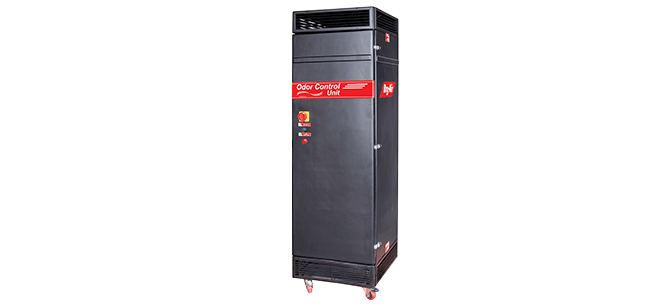
How Can an Odour Control System Improve Air Quality in Industrial Environments?

Industrial environments can contain a combination of particulate matter, volatile compounds, corrosive gases, and other airborne contaminants. Some of these pollutants can produce noticeable odours, while others may affect indoor air quality or sensitive equipment even when they are not immediately detectable by smell. Effective air treatment therefore requires more than simply masking unpleasant odours. It requires identifying the contaminants involved and applying an appropriate filtration technology.
Industries such as food processing, wastewater treatment, chemical manufacturing, research facilities, and waste management can encounter different types of odorous compounds. Bry-Air identifies sources of odour pollution including industrial processes, waste treatment facilities, agricultural activities, transportation, and chemical releases. Common compounds associated with industrial odours can include ammonia, hydrogen sulfide, sulfur oxides, benzene, toluene, xylene, formaldehyde, and other volatile organic compounds.
An odour control system can address these contaminants through gas-phase filtration technologies designed around the characteristics of the air stream. This approach can help improve environmental conditions while also supporting the protection of people and equipment from unwanted gaseous contaminants.
What Causes Industrial Odours?
Different Processes Produce Different Contaminants
Industrial odour is not caused by a single type of chemical. The composition of an odorous air stream depends on the materials, processes, temperature, ventilation conditions, and waste streams involved. Food processing operations, for example, may generate aldehydes, ketones, alcohols, acids, ammonia, amines, mercaptans, and VOCs.
Wastewater and sewage-related environments can contain sulfur-containing compounds and other gases generated during biological decomposition. Manufacturing and chemical processes may introduce VOCs or reactive gases into the surrounding air. Because these sources vary considerably, an effective treatment strategy should begin with an understanding of the contaminants rather than selecting filtration equipment based only on the presence of an odour.
Why Odour Masking Is Not Enough
Air fresheners and fragrance-based products can cover unpleasant smells, but they do not necessarily remove the gaseous contaminants responsible for the odour. Industrial air treatment requires a more controlled approach because the objective is generally to reduce the concentration of unwanted compounds in the air.
Gas-phase filtration can address contaminants at the molecular level through processes such as adsorption and chemisorption. These mechanisms are particularly relevant where gaseous pollutants cannot be adequately addressed through conventional particulate filtration alone. Bry-Air describes gas-phase filtration systems as solutions for removing corrosive and odorous gases from industrial and commercial environments.
How Does Gas-Phase Filtration Help Control Odours?
Understanding Adsorption
Adsorption occurs when gas molecules are retained on the surface of a suitable filtration medium. Activated carbon and other sorptive materials can provide a large surface area for capturing specific gaseous contaminants.
The effectiveness of adsorption depends on factors such as the chemical properties of the contaminant, concentration, airflow, contact conditions, and characteristics of the filter media. For this reason, filtration media should be selected according to the actual air-treatment requirement rather than assuming that one material is suitable for every application.
Understanding Chemisorption
Chemisorption involves a chemical reaction between the contaminant and reactive compounds incorporated into the filtration media. Instead of simply retaining the pollutant, the media can chemically react with selected gaseous contaminants and neutralize them.
Bry-Air’s gas-phase filtration technology combines adsorption and chemisorption depending on the application. Its chemical media portfolio includes combinations involving activated carbon and activated alumina with proprietary impregnates designed to address gases such as hydrogen sulfide, sulfur dioxide, chlorine, ammonia, and other VOCs.
This distinction is important because odour control is not simply a matter of moving air through a filter. The filtration medium must have appropriate chemical characteristics for the contaminants present in the air stream.
What Should Be Considered When Selecting Odour Control Units?
Airflow and Contaminant Concentration
Airflow is one of the fundamental design parameters when evaluating an air-treatment system. Odour control units need to handle the required air volume while providing appropriate contact time with the filtration media. Contaminant concentration is equally important because a system exposed to a low concentration of a specific compound may have different media requirements from a system handling a higher concentration or a combination of several gases. Bry-Air notes that system selection can depend on airflow, the types and concentrations of impurities, available space, and desired media life.
Filtration Media and Configuration
The filtration media should correspond to the chemical characteristics of the target contaminants. Different impregnated media can be designed to react with different gases, while activated carbon-based materials can support the removal of selected VOCs and odorous compounds.
Bry-Air’s honeycomb chemical filters use a macroporous desiccant honeycomb matrix and different chemical impregnations for contaminant removal. The company identifies these filters as components of gas-phase filtration systems used across industrial and commercial applications.
Prefiltration and Particle Removal
Odour treatment can also require attention to particulate matter. Dust and suspended particles can affect filtration performance and increase the loading on downstream chemical media. In applications such as animal research laboratories, Bry-Air describes the use of prefilters to retain dust and particles before contaminated air reaches the chemical media stages.
This illustrates why an effective air-treatment design may involve multiple filtration stages rather than relying on a single filter.
Where Can Industrial Odour Control Be Applied?
Food Processing Facilities
Food processing operations can generate odours from raw materials, processing activities, fermentation, cleaning processes, and waste streams. The composition of these odours can vary significantly depending on the process and materials involved.
Bry-Air identifies aldehydes, ketones, alcohols, acids, ammonia, amines, mercaptans, and VOCs among compounds that may be encountered in food processing environments. Its odour-control approach focuses on treating contaminated air and removing suspended particles and corrosive gases.
Wastewater and Waste Treatment
Wastewater treatment and waste management facilities can produce odorous compounds during decomposition and treatment processes. Hydrogen sulfide and other sulfur-containing compounds are particularly relevant to many wastewater-related environments.
Gas-phase filtration can be incorporated into ventilation or air-treatment strategies to reduce gaseous contaminants and improve the surrounding air environment. However, system design should account for the specific contaminants and operating conditions of the facility.
Research and Controlled Environments
Research laboratories can require additional attention to airborne contaminants because the environment may involve sensitive processes, equipment, chemicals, or biological materials. Bry-Air’s animal research laboratory application describes the treatment of waste anaesthetic gases, gases associated with animal excreta, and other pungent contaminants through adsorption and chemisorption.
The same principle applies broadly to controlled environments where gaseous contaminants need to be managed alongside particulate filtration and ventilation.
How Can Businesses Maintain Effective Odour Control?
Monitor the Air Treatment Requirement
Odour-control performance should be evaluated against the actual air-treatment objective. Important parameters can include airflow, contaminant type, contaminant concentration, operating hours, temperature, humidity, and expected filter loading.
Monitoring these conditions helps determine whether the selected filtration configuration remains suitable as operating conditions change.
Plan Filter Maintenance and Replacement
Chemical filtration media has a finite service life. Its performance can decline as the available reactive or adsorption capacity is consumed. Filter replacement intervals therefore depend on the contaminant load and operating conditions rather than simply following a universal schedule.
Regular inspection and appropriate replacement planning can help maintain consistent air-treatment performance and avoid operating with exhausted media.
Consider the Entire Airflow Path
Odour treatment works best when the air path is properly considered. The location of extraction points, ventilation patterns, leakage, filtration stages, and treated-air discharge can all influence system performance.
A properly designed system should address the source and airflow path rather than attempting to compensate for poor ventilation through filtration alone. Source control, ventilation management, particulate filtration, and gas-phase treatment can work together as part of a broader air-quality strategy.
Why Is Technical Expertise Important in Odour Control?
Odour control involves both air engineering and chemical filtration principles. The correct solution depends on the nature of the contaminants, their concentrations, airflow requirements, environmental conditions, and the required service life of the filtration media.
Bry-Air has more than six decades of experience in dehumidification and environmental control technologies and reports installations across more than 80 countries. Its portfolio includes gas-phase filtration systems alongside dehumidification and other environmental control technologies.
The company also states that its gas-phase filtration testing capabilities cover granular media and chemical filtration devices, with testing conducted according to relevant ISO and ASHRAE standards.
This type of technical evaluation is valuable because odour-control requirements differ considerably between industries. Selecting a system based on measurable operating conditions can provide a more reliable approach than choosing equipment based only on general airflow capacity.
Conclusion
An industrial odour problem is often an air-quality challenge involving specific gaseous contaminants rather than simply an unpleasant smell. Effective treatment requires understanding the source, identifying the contaminants, assessing airflow and concentration, and selecting appropriate filtration media. Technologies based on adsorption and chemisorption can provide targeted treatment for odorous and other gaseous contaminants when properly engineered.
A comprehensive approach should also consider prefiltration, ventilation, media selection, maintenance, and operating conditions. With the right system design, gas-phase filtration can contribute to cleaner air, improved workplace conditions, and better protection of sensitive equipment.
For facilities evaluating their odour-treatment requirements, technical assessment is an important first step. To discuss application-specific requirements and filtration options, Contact Us with the relevant airflow, contaminant, and operating information.