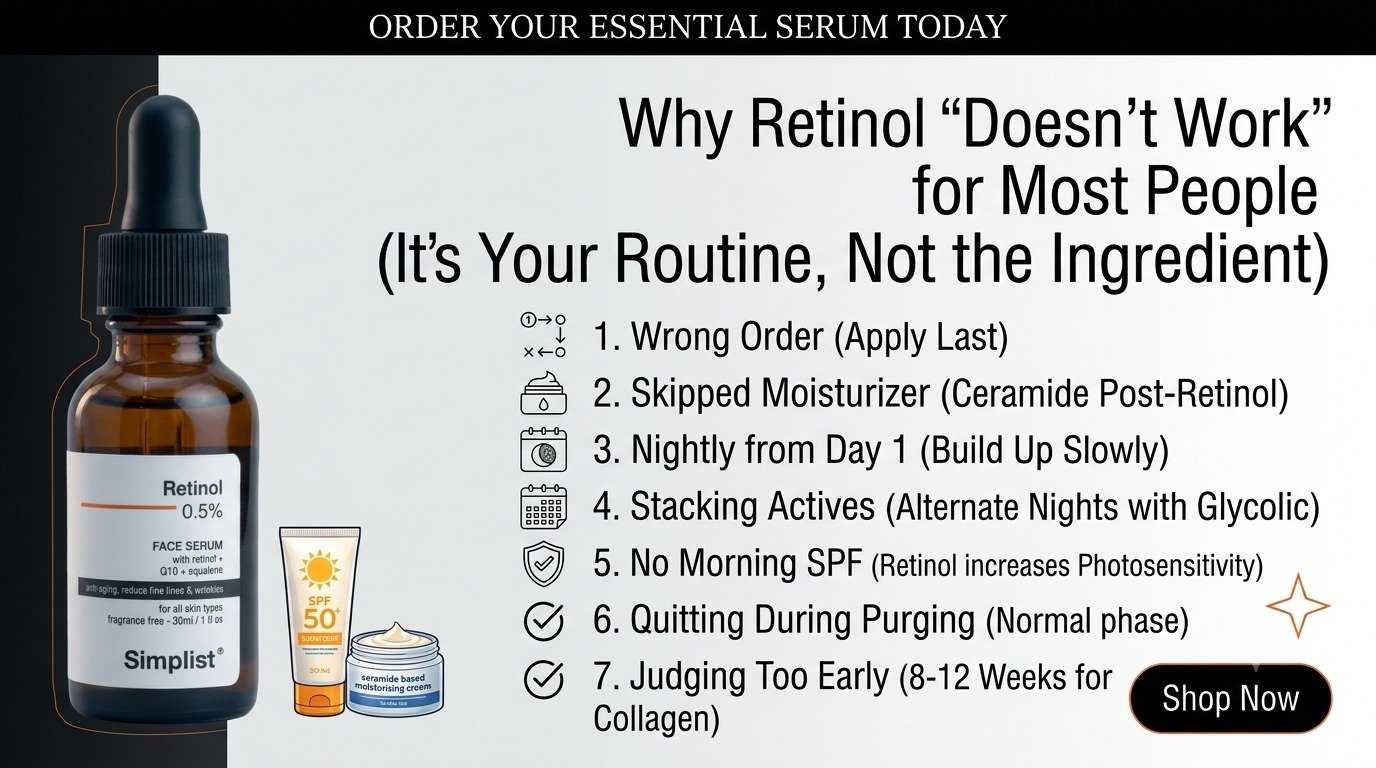
Why Retinol “Doesn’t Work” for Most People (It’s Your Routine, Not the Ingredient)

Retinol has more clinical research behind it than almost any other over-the-counter skincare ingredient, yet it’s also the one dermatologists hear the most complaints about: “I used it for a month and nothing happened,” or “it just made my skin worse.” After treating hundreds of patients who’ve tried and abandoned retinol, the pattern is almost always the same. The ingredient isn’t failing. The routine around it is undermining it before it gets the chance to work.
Mistake One: Applying It in the Wrong Order
Retinol needs to reach the skin directly to convert into retinoic acid and do its job. If it’s applied before other serums, or sandwiched between layers of other products, its penetration gets diluted and inconsistent. The correct order is water-based serums first (anything like hyaluronic acid or niacinamide), then retinol last, since it’s typically formulated in an oil base and is meant to sit on top, sealing in everything applied before it. Apply it before your other actives and you’re not getting a stronger effect, you’re getting a less predictable one.
Mistake Two: Skipping the Moisturizer Step
This is the single most common reason people quit retinol within the first two weeks. Retinol accelerates cell turnover, which temporarily increases transepidermal water loss while skin adjusts. Without a moisturizer immediately after, that dryness compounds night after night until it looks and feels like a reaction rather than a normal adjustment phase. A barrier-supporting moisturizer, ideally one with ceramides and hyaluronic acid, isn’t optional during this period. It’s what determines whether the first month feels manageable or miserable (this is why a retinol serum is always meant to be followed immediately by a ceramide-based moisturizer, not used alone).
Mistake Three: Going Straight to Nightly Use
Retinol doesn’t reward intensity, it rewards consistency built gradually. Starting at nightly application, especially at a higher percentage, overwhelms skin before it’s had the chance to build tolerance. The result is exactly the kind of irritation, redness, and flaking that convinces people the ingredient “doesn’t suit” them, when in reality almost anyone can tolerate retinol if they build up slowly enough. The standard approach: 2 to 3 nights a week for the first 2 to 4 weeks, then every other night, then nightly once skin has clearly adjusted.
Mistake Four: Stacking It With Other Actives the Same Night
Using retinol alongside salicylic acid, glycolic acid, or other strong exfoliants on the same night compounds irritation without adding proportional benefit. Each of these ingredients works by increasing cell turnover or exfoliation through a different mechanism, and stacking them overwhelms the skin barrier rather than accelerating results. If you’re managing both acne and early aging concerns, alternate nights: retinol one night, your other active the next, rather than combining them.
Mistake Five: No Sunscreen the Next Morning
Retinol significantly increases photosensitivity. Skipping sunscreen the morning after applying it doesn’t just risk sunburn, it actively works against everything retinol is trying to accomplish. UV exposure breaks down the same collagen retinol is stimulating and can trigger pigmentation, essentially cancelling out weeks of consistent use in a single unprotected afternoon. In Pakistan’s climate, where summer UV index readings frequently exceed 10, this isn’t a minor detail. It’s often the actual reason someone’s “retinol isn’t working” after two months of otherwise correct use.
Mistake Six: Quitting During the Purge
Purging is a normal, temporary phase where retinol accelerates the surfacing of congestion that was already forming beneath the skin. It typically shows up in the same areas someone already breaks out (jawline, chin, forehead) and resolves faster than an untreated breakout would, generally within 2 to 4 weeks. The mistake is confusing this normal adjustment with a bad reaction and stopping before the purge resolves, right before the skin would have started showing genuine improvement.
The distinction matters: if breakouts appear in your usual spots and seem to be resolving over time, that’s purging, and pushing through is the right call. If you notice burning, stinging that doesn’t fade, or a rash somewhere you don’t normally break out, that’s a different situation entirely and warrants stopping and consulting a dermatologist.
Mistake Seven: Judging Results Too Early
Retinol’s timeline is genuinely slower than most other actives, and expecting visible change within two or three weeks sets people up to quit right before results would have appeared. The realistic breakdown:
- Week 1 to 2: Adjustment phase. Possible dryness, flaking, or purging.
- Week 3 to 4: Skin stabilizes, texture starts looking more refined.
- Week 8 to 12: Fine lines visibly soften and firmness improves as collagen rebuilds beneath the surface.
Collagen synthesis is a slow biological process. There’s no version of retinol, at any concentration, that produces meaningful firmness change in under two months. Anyone claiming otherwise is either overselling a product or describing a temporary plumping effect that fades.
Putting It All Together
None of these seven mistakes are about retinol being too harsh or not suited to certain skin types. They’re routine errors, and every one of them is fixable. Apply retinol last in your routine, moisturize immediately after, build up frequency slowly, avoid stacking other actives the same night, wear SPF religiously the next morning, distinguish purging from a genuine reaction, and give it the full 8 to 12 weeks before deciding whether it’s working. Fix the routine, and the ingredient almost always does exactly what the research says it should.