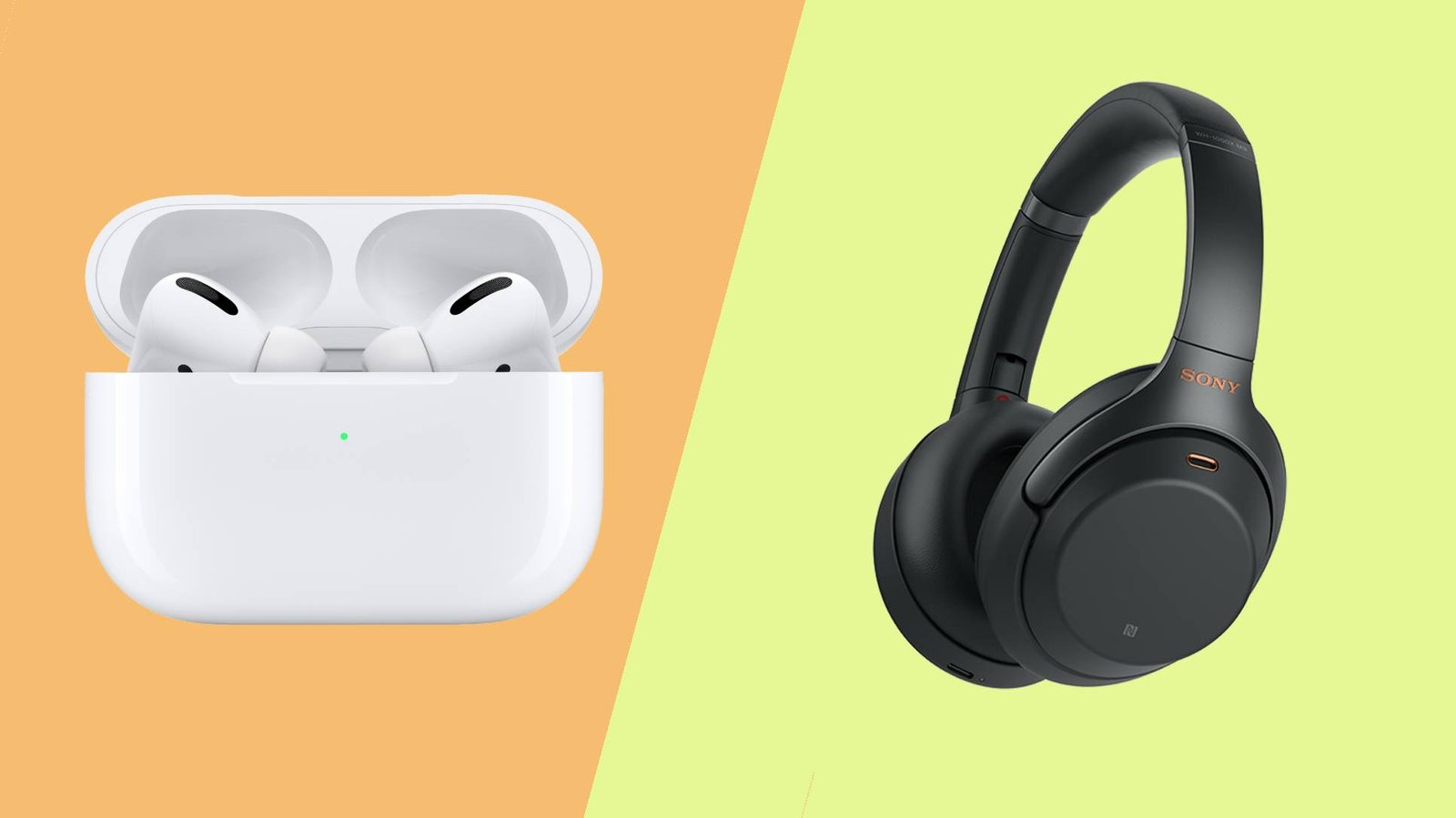
Wireless Earbuds vs. Over-Ear Headphones: Which Should You Choose?

Choosing the right headphones can be surprisingly complex in 2026. Technology has advanced to the point where options cater to every lifestyle, from premium over-ear headphones to sleek wireless earbuds. Both styles have advantages, and the best choice depends on your priorities, habits, and how you intend to use them.
This guide explores the differences between wireless earbuds and over-ear headphones, examining comfort, portability, sound quality, battery life, features, and lifestyle compatibility to help you make an informed decision.
Design and Portability
One of the most obvious differences between wireless earbuds and over-ear headphones is size and portability. Earbuds are compact, lightweight, and easy to carry. They fit in your pocket or a small case, making them ideal for commuting, traveling, or workouts. Because of their small form factor, earbuds are almost invisible when worn, which can appeal to people who prefer minimalistic devices.
Over-ear headphones, in contrast, are larger and bulkier. They usually require a bag or dedicated storage when not in use. However, the larger size allows more room for internal components like bigger drivers, advanced noise cancellation systems, and more substantial batteries. While they are less convenient to carry, over-ear headphones provide a more immersive experience for home, office, or long travel sessions where portability is less critical.
Comfort and Fit
Comfort is a key factor for extended use. Earbuds are lightweight and unobtrusive, but not all designs suit every ear. Poorly fitted earbuds can fall out, cause ear fatigue, or reduce sound quality. Many modern earbuds include multiple tip sizes and silicone or foam options to improve comfort and fit. Ergonomics have improved dramatically over recent years, making premium earbuds suitable for long listening sessions.
Over-ear headphones distribute weight around the ear and head, which can reduce pressure points. Cushioned ear pads enhance comfort, and headbands with adjustable sizing accommodate different head shapes. However, large headphones can feel heavy after extended use and may cause heat buildup around the ears. Despite this, many users find over-ear designs preferable for long listening sessions because they don’t sit inside the ear canal, reducing fatigue in that area.
Sound Quality
Sound quality is often the most important factor when choosing headphones. Over-ear headphones generally have an advantage because their larger drivers can produce richer, more detailed audio with deeper bass and a wider soundstage. They handle complex music tracks with greater clarity, making them ideal for audiophiles, gamers, and professional audio work.
Wireless earbuds have improved significantly in recent years, offering high-fidelity sound, adaptive EQ, and support for advanced codecs such as LDAC, aptX Adaptive, and AAC. While some high-end earbuds approach over-ear quality, smaller drivers inherently have limitations in bass depth and spatial audio. That said, earbuds are sufficient for casual listening, podcasts, calls, and commuting. The difference in sound quality may only be noticeable to users with critical ears or specialized use cases.
Noise Cancellation and Ambient Modes
Both wireless earbuds and over-ear headphones offer noise cancellation, but implementation differs. Over-ear headphones often use larger microphones and ear cup seals to provide stronger active noise cancellation (ANC). This can significantly reduce environmental noise, such as airplane engines, busy offices, or city traffic.
Wireless earbuds have smaller drivers and microphones, so ANC is sometimes less aggressive, though technology has advanced rapidly. Premium earbuds now include adaptive noise cancellation and transparency modes, allowing users to hear environmental sounds without removing the device. Earbuds are particularly effective for commuting, running, or walking in environments where situational awareness is important.
Over-ear headphones, on the other hand, offer superior isolation when fully sealed, making them ideal for deep focus, immersive music experiences, or gaming in noisy spaces. Transparency modes in earbuds can’t fully replicate the open awareness needed outdoors, while over-ear headphones may feel cumbersome in such scenarios.
Battery Life
Battery life varies significantly between earbuds and over-ear headphones. Wireless earbuds typically offer 5–10 hours of playback on a single charge, with charging cases providing multiple top-ups. This design makes them highly portable and ideal for all-day use without frequent wall charging. Fast charging allows users to gain hours of playback in just minutes.
Over-ear headphones usually include larger batteries, often delivering 20–40+ hours of continuous playback. Some high-end models even exceed 50 hours. While bulkier, the larger battery supports ANC, higher-power drivers, and premium audio processing. Over-ear headphones are better suited for long sessions without worrying about frequent recharging, though they require a more substantial charging setup.
Calls, Voice Assistants, and Productivity
For work calls, meetings, and voice commands, wireless earbuds are generally more practical. They are unobtrusive, often include multiple microphones with noise suppression, and integrate seamlessly with voice assistants. Features like automatic pause, tap controls, and adaptive ANC make earbuds ideal for multitasking and mobile productivity.
Over-ear headphones also support calls and voice assistants but may be less convenient in crowded or active environments. Their size can make them impractical during walking or commuting, though they provide superior audio clarity and isolation for home or office calls.
Durability and Use Cases
Earbuds are generally durable for everyday commuting, workouts, and casual use. Sweat and water resistance are common in modern models, making them suitable for fitness enthusiasts. However, their small size makes them easier to lose or damage if not handled carefully.
Over-ear headphones are more robust and often designed to last longer. They are less prone to loss, offer more physical protection, and can withstand extensive use without compromising comfort or sound quality. They are ideal for stationary activities such as home listening, studio work, gaming, or travel.
See also: Skyware Inventory: Smarter Stock Management for Growing Businesses
Cost Considerations
Price can influence the decision between earbuds and over-ear headphones. Premium wireless earbuds can cost as much as $200–$400, while high-end over-ear headphones can range from $300–$600 or more. Budget options exist for both categories, but high-quality sound, ANC, and smart features tend to be more accessible in the over-ear form factor because larger components can be used without space constraints.
The decision often comes down to value based on lifestyle. If portability, convenience, and fitness integration matter most, earbuds provide better ROI. For immersive audio, extended sessions, and superior ANC, over-ear headphones may justify the higher cost.
Portability vs. Immersion
The core trade-off between wireless earbuds and over-ear headphones is portability versus immersion. Earbuds offer extreme portability and freedom of movement, ideal for active lifestyles, commuting, and on-the-go usage. Over-ear headphones sacrifice portability for immersive sound, comfort during long sessions, and superior ANC performance.
Some users choose to own both: earbuds for mobility and workouts, over-ear headphones for focused listening, gaming, and home or office use. This hybrid approach leverages the strengths of each design.
Personal Preference and Use Case
Ultimately, the choice comes down to personal preference and specific use cases. Consider your daily activities:
- For commuting, walking, or exercising: Wireless earbuds provide convenience, secure fit, and transparency modes for safety.
- For gaming, studio work, or home listening: Over-ear headphones deliver richer sound, better noise isolation, and longer battery life.
- For professional calls: Earbuds are convenient, but over-ear headphones may offer superior microphone quality in controlled environments.
- For travel: Over-ear headphones with strong ANC are often more effective at canceling airplane noise, though earbuds excel in portability.
Lifestyle, comfort, budget, and desired features should guide the decision rather than purely technical specifications.
Future Trends
Looking ahead, the gap between wireless earbuds and over-ear headphones is narrowing. Earbuds continue to improve in sound quality, ANC, battery life, and AI-driven features. Over-ear headphones are becoming more lightweight, foldable, and wireless-friendly.
Technologies like spatial audio, adaptive EQ, and AI-powered listening optimization are being integrated into both formats, making the choice less about raw technology and more about form factor, convenience, and personal preference.
Conclusion
Wireless earbuds and over-ear headphones each offer unique advantages. Earbuds excel in portability, convenience, and active lifestyle compatibility, while over-ear headphones provide superior sound quality, comfort for long sessions, and more effective noise cancellation.
Choosing the right type depends on how you plan to use your headphones, your priorities in comfort, portability, sound, and features, and the environments in which you’ll use them. For many people, a combination of both may provide the best balance: earbuds for mobility and over-ear headphones for immersive home or office experiences.
In 2026, headphones are more than just audio devices—they’re lifestyle tools. Understanding the trade-offs between wireless earbuds and over-ear headphones ensures you select the device that enhances your daily life, fits your routines, and delivers the listening experience you need.