Merging Technology and Human Expertise in US Higher Education

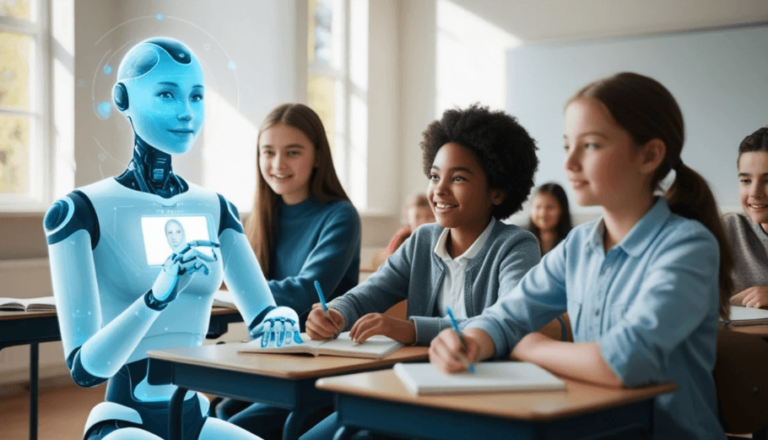
The American higher education system is currently navigating its most significant transformation since the GI Bill. As we move through 2026, the traditional boundaries of the “English classroom” have dissolved. In universities ranging from the tech-heavy corridors of MIT to the liberal arts colleges of the Midwest, the focus has shifted from simple essay writing to “Digital Rhetoric” and “Ethical AI Communication.”
Recent data from the 2025-2026 academic cycle indicates that over 92% of US university students now utilize generative AI tools as part of their daily study routine. However, this surge in technology has created a new challenge: the “Quality Gap.” While machines can generate text, they often struggle with the cultural nuances, emotional intelligence, and rigorous academic standards required by top-tier US institutions.
Key Takeaways
- EdTech Dominance: AI usage in US universities has jumped from 66% in 2024 to over 90% in 2026.
- The Literacy Shift: Modern English assignments now require “Multi-modal Literacy,” combining text, data visualization, and digital ethics.
- Public Speaking Evolution: Tech-centric speech topics, such as AI ethics and climate technology, are the highest-scoring themes in 2026.
- Support Systems: Professional academic assistance serves as a critical “sanity check” against AI misinformation and structural errors.
- Employment Readiness: 83% of US businesses now view AI fluency and advanced communication skills as the top hiring priorities.
Data-Driven Insights: The State of US Education in 2026
To understand why students are seeking specialized help, we must look at the numbers. According to recent market analysis, the North American EdTech market is valued at over $93 billion, with a year-over-year growth rate of 15.8%. This investment isn’t just in hardware; it’s in platforms that facilitate smarter learning.
Student Behavior Statistics:
- Research Efficiency: 53% of students use AI to gather facts and summarize long-form academic journals.
- The Hallucination Hurdle: 51% of students report that “AI hallucinations” (misinformation) are their primary reason for seeking human verification.
- Grade Impact: Institutions using personalized AI-human hybrid support have seen a 15% increase in passing rates and a 70% boost in course completion.
See also: business strategy and forecasting
Mastering the Linguistic Nuance: Why Professional Guidance Matters
In the US, “English” as a subject is no longer just about reading Shakespeare. It encompasses technical writing, persuasive communication, and digital storytelling. For international students or even native speakers aiming for honors, the complexity of these tasks is immense.
When a student seeks English assignment help, they are not just looking for a “writer.” They are looking for a structural architect who understands the specific rubrics of American grading systems. Professional guidance ensures that:
- Citations are accurate: Moving beyond the common mistakes of auto-generators.
- Voice is authentic: Ensuring the student’s unique perspective isn’t lost in “bot-speak.”
- Critical Thinking is evident: Moving from summary to synthesis—the gold standard of US academia.
Case Study: Bridging Technology and Tradition
Student Profile: Sarah, a Junior at a large State University in Texas. Major: Communication Arts & Tech. The Challenge: Sarah was tasked with delivering a 10-minute persuasive speech on “The Socio-Economic Impact of Quantum Computing on Rural America.”
The Process:
- Phase 1 (Tech): Sarah used AI to brainstorm 50 different angles. She felt overwhelmed by the data and struggled to find a “human story” to anchor her speech.
- Phase 2 (Support): Sarah consulted a list of curated speech topics to narrow her focus down to “The Digital Divide.”
- Phase 3 (Refinement): She worked with a professional academic consultant to ensure her data from the US Census Bureau was correctly interpreted and that her rhetorical “hooks” would resonate with a diverse audience.
The Result: Sarah received an ‘A’ grade. Her professor noted that while her data was “cutting-edge,” it was her “ability to weave a narrative through complex technical concepts” that set her apart. Sarah’s case highlights that technology provides the bricks, but professional guidance provides the blueprint.
The Future of Public Speaking: 2026 Trends
In 2026, the most effective speech topics are those that intersect with the “human-tech” experience. If you are preparing for a presentation, consider these data-backed categories:
- The “Neuro-Ethics” Category: How brain-computer interfaces will change the definition of “privacy” in the US.
- The “Climate Tech” Category: Why the US power grid needs an AI overhaul to support renewable energy.
- The “Digital Nomad” Category: Analyzing how remote work has permanently shifted the GDP of mid-sized American cities.
FAQs: Navigating Academic Support in the US
Q1: Is using online assignment help considered “cheating” in US universities?
Not if used correctly. Most US institutions view professional help as a “tutoring or consultative resource.” It is a tool for learning, refining, and understanding complex rubrics, similar to a writing center.
Q2: How do I choose a speech topic that will engage a Gen Z audience?
Focus on “Immediate Relevance.” Topics dealing with mental health, social media algorithms, or the future of the job market in an automated world are currently the most successful in American classrooms.
Q3: Can AI replace the need for an English tutor?
Data says no. While AI can fix grammar, 59% of students worry that over-reliance on AI reduces their critical thinking. A human tutor provides the “rhetorical strategy” that AI currently lacks.
Q4: What is the most common mistake US students make in English assignments?
“Description without Analysis.” Many students describe what happened in a text or a data set, but fail to analyze why it matters—which is the primary metric for grading in the US.
Conclusion: The Hybrid Path to Success
As we look toward 2027, the “Digital Renaissance” in education will only accelerate. The most successful students in the United States won’t be those who reject technology, nor those who rely on it entirely. Instead, the winners will be the “Hybrid Learners”—those who leverage the speed of EdTech and the depth of professional academic expertise.
By integrating resources that offer specialized linguistic support and creative inspiration, students can move beyond the anxiety of the “blank page” and start producing work that is truly worthy of the 21st-century stage.
Author Bio
Alex Sterling is a senior education technology consultant and a recurring contributor to several US-based academic journals. With over a decade of experience navigating the shifting landscape of American higher education, Alex specializes in the integration of AI tools within traditional humanities curricula. Currently, Alex works alongside MyAssignmentHelp to develop data-driven strategies that help university students bridge the gap between digital literacy and academic excellence. When not analyzing EdTech trends, Alex can be found lecturing on the importance of human-centric communication in the age of automation.