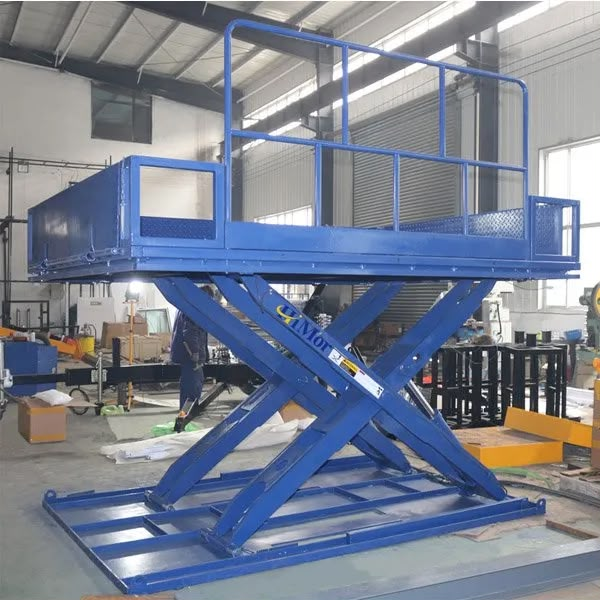
How to Select the Right Scissor Lift Table for Industrial Operations

A lift table should be selected based on the weight it will handle in normal operation, not a rough estimate. Pallets, fixtures, containers, tools, and any attachments should all be included when calculating the working load.
Choosing suitable equipment also means leaving a reasonable safety margin. Experienced scissor lift table manufacturers can help match platform size, rated capacity, lifting height, and structural design to the intended task instead of relying on a one-size-fits-all model.
Match the Platform to the Material
The platform needs to support the shape and footprint of the load as well as its weight. A compact pallet, a long component, and a wheeled trolley may each require a different deck size or surface arrangement.
An oversized platform can take up unnecessary floor space, while a deck that is too small may create handling problems. The most practical design is one that supports the normal load securely without making loading and unloading awkward.
See also: Merging Technology and Human Expertise in US Higher Education
Consider the Required Lifting Height
Lift height should be based on the exact levels the equipment needs to connect. Some applications only require ergonomic height adjustment, while others need to move goods between a floor, mezzanine, loading dock, or production stage.
The installation method also matters. A surface-mounted unit may suit one facility, while a pit-mounted design can keep the lowered platform closer to floor level and simplify pallet or trolley transfer.
Review the Available Floor Space
A warehouse or production area may have columns, racks, walls, traffic lanes, or other equipment close to the proposed lift location. These details can affect both platform dimensions and the space needed for safe operation.
Site measurements should therefore be taken before finalizing the design. Access for maintenance, nearby pedestrian routes, and the movement of forklifts or pallet trucks should also be considered during layout planning.
Think About How the Lift Will Be Used
A scissor lift table used occasionally for maintenance does not face the same duty cycle as a unit working continuously on a production line. Frequency of use can influence hydraulic components, controls, and the overall design specification.
Teams should describe how many cycles are expected, how long the lift may remain raised, and whether the load changes throughout the day. Clear operating information helps prevent under-specifying equipment for a demanding application.
Plan the Loading and Unloading Process
The lift should fit naturally into the workflow around it. Workers may load it with pallet trucks, forklifts, carts, conveyors, or by hand, and each method creates different access and platform requirements.
Entry direction is especially important in tight spaces. Depending on the site, the lift may need access from one side, two opposite sides, or several directions to avoid unnecessary repositioning of materials.
Give Safety Features Proper Attention
Industrial lifting equipment should include safety measures appropriate to the installation and operating environment. Emergency stop controls, anti-fall protection, limit switches, barriers, toe protection, and safe maintenance support may all be relevant.
The correct configuration depends on the application. A lift working inside a controlled production area may need a different guarding arrangement from one installed near a busy warehouse traffic route.
Check Power and Site Conditions
Electrical supply varies between facilities and countries, so voltage and control requirements should be confirmed before manufacturing. Outdoor or dusty environments may also require additional consideration for electrical components and surface protection.
Temperature, moisture, washdown procedures, and exposure to corrosive materials can affect equipment selection as well. Sharing these conditions early allows the manufacturer to propose suitable finishes and component protection.
Make Maintenance Part of the Purchase Decision
A lift table should remain accessible for inspection, lubrication, hydraulic checks, and routine servicing after installation. Designs that are difficult to reach can turn simple maintenance tasks into unnecessary downtime.
Buyers should ask what routine checks are recommended and which components are likely to need periodic attention. Keeping service documentation and operator instructions available also helps facilities maintain consistent practices over the life of the equipment.
Conclusion
Selecting a scissor lift table is an engineering decision rather than simply a comparison of price and capacity. Load, platform size, lifting height, duty cycle, access, site layout, power, and safety all influence whether a unit will work effectively.
A clear specification makes the purchasing process more reliable. When buyers provide accurate site and operating details, manufacturers can design equipment around the real workflow, helping the lift integrate smoothly into daily warehouse or production activity.