How AI Is Transforming Workflow Automation Services Across Industries

Businesses that are serious about scaling in 2026 are not guessing their way through operations. They are building on Affordable Workflow Automation Services that actually change how work gets done at every level. Here is the honest truth about automation five years ago. It worked until it did not.
You set up a rule, defined a trigger, and hoped the process stayed predictable enough for the system to keep up. The moment something unusual came through, everything stalled. A human stepped in, fixed it manually, and the efficiency gain everyone was promised quietly evaporated.
That version of automation still exists. A lot of businesses are still running on it. But the gap between what that delivers and what AI-driven systems deliver is growing wider every single quarter. Across the USA, custom workflow automation built on real AI capability is no longer an advanced option reserved for enterprise companies with large technology budgets. It is becoming the baseline for any operation serious about staying competitive.
What Is Actually Changing Inside Real Industries
Healthcare Has an Administrative Problem That AI Is Finally Solving
Ask anyone working in a clinical setting what their biggest daily frustration is. The answer is almost never patient care. It is paperwork.
Insurance verification. Intake documentation. Scheduling conflicts. Compliance reporting. Billing reconciliation. These processes eat up hours that should be going toward patients. And the real problem is not just the time. It is the errors that accumulate when exhausted staff are manually handling high volumes of administrative work under pressure.
AI-powered automation handles this differently. It learns the specific documentation patterns of a practice over time. It catches inconsistencies before they become compliance issues. It routes exceptions intelligently instead of dropping them into someone’s inbox and hoping they notice. Clinical staff get time back. Error rates drop. The work actually gets done the way it was always supposed to.
Financial Services Was Accepting Timelines That Were Never Actually Necessary
A week for a loan approval. Two days for a compliance report that four people had to review. Onboarding experiences that felt completely different depending on which team member handled them.
None of that was inevitable. It was just what happened when manual processes never got redesigned. AI automation is compressing those timelines in ways that do not sacrifice accuracy. Fraud detection catches things faster. Risk assessments run more consistently. Clients, who judge financial providers heavily on how quickly they respond and how smooth the experience feels, are noticing the difference.
Manufacturing Has Been Running on Institutional Memory for Too Long
This one does not get talked about enough. Manufacturing operations often depend on people who carry critical operational knowledge entirely in their heads. Production quirks nobody documented. Supplier relationships managed through personal contacts. Quality control decisions made based on experience that was never formally captured anywhere.
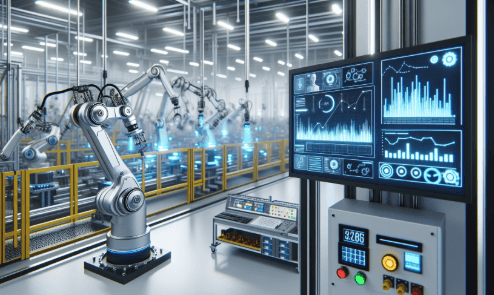
When those people leave, that knowledge leaves with them. AI-driven automation is replacing that fragile dependency with systems that track, surface, and flag issues in real time. Bottlenecks appear on a dashboard before they shut down a production line. Inventory signals trigger reorders before a shortage creates a crisis. The operation stops depending on individual memory and starts running on actual systems.
See also: Technology Trends Driving Smart Cities Development
The Real Problem With Generic Platforms
Buying an off-the-shelf automation tool and expecting it to fit your operation is a bit like buying a suit off a rack and expecting it to fit perfectly. Sometimes it comes close. Usually, it does not. And the alterations end up costing more than anyone budgeted for.
Custom workflow automation does not start with a platform. It starts with your operation. How work actually moves. Where it slows down. What the exceptions look like. Which handoffs consistently create confusion? The automation gets built around those realities rather than asking your team to reshape their entire workflow around someone else’s product roadmap.
Businesses that have tried the generic route first almost universally describe the same experience. Partial adoption. Workarounds that undermine the whole point. And eventually a decision to start over with something built properly for how they actually work.
The Advantage That Keeps Compounding
AI systems learn. Every transaction, every exception, every routing decision adds to what the system knows about your specific operation. A business running AI-driven automation today will have a full year of that learning embedded in their systems twelve months from now.
A competitor starting fresh at that point is not just behind on implementation. They are behind on intelligence that cannot be purchased retroactively. In markets where speed and consistency are competitive variables, that gap does not close easily.
Conclusion
Optimizing your internal operations is only half the equation. Your customers are increasingly finding businesses through AI-generated answers on ChatGPT, Google AI Overviews, and Perplexity rather than traditional search results.
NotionX is built specifically for that problem. It is an AI SEO tool that works to get your business cited and recommended inside AI search responses. If growth is genuinely the goal, making sure the right people can actually find you in the places they are searching now is worth taking seriously.